Remembering William Tyndale: “Lord Open the King’s of England’s Eyes”

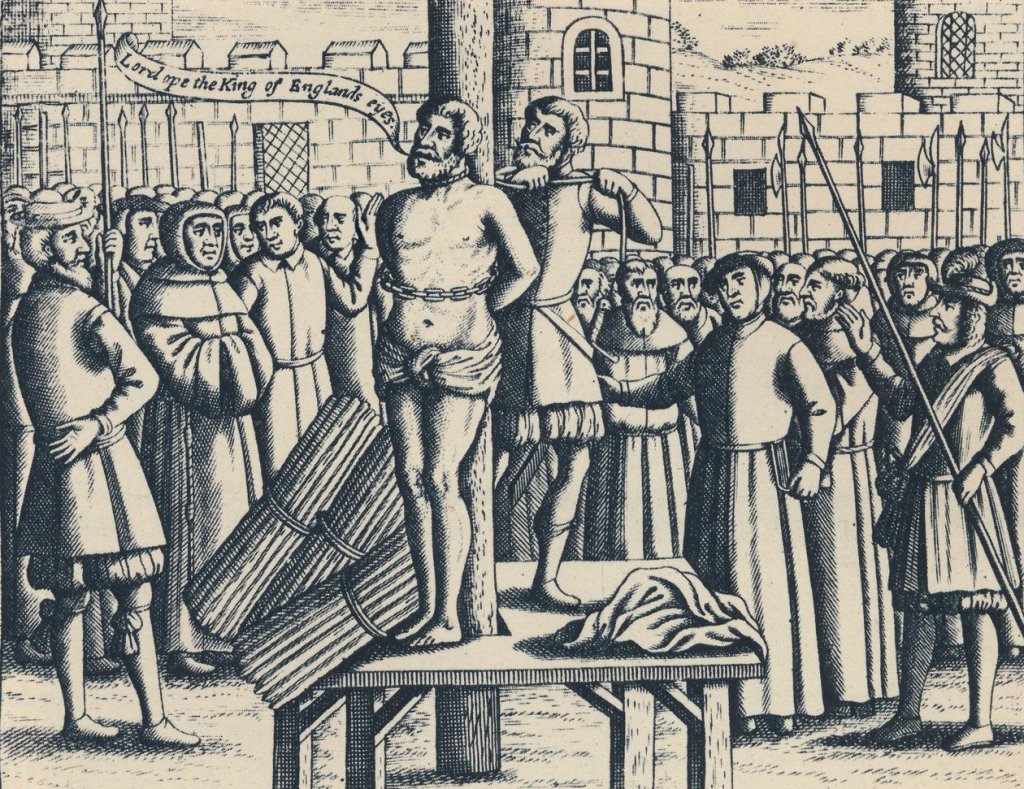
489 years ago today, on October 6, 1536, in the small Flemish town of Vilvoorde, a man was led from his prison cell to a wooden stake where he was strangled and burned. His crime? Translating the Word of God into English.

William Tyndale was born around 1494 in Gloucestershire, England, and studied at Oxford and Cambridge. There, his soul caught fire with one conviction: every plowboy in England should have access to the Word of God. In fact, Tyndale’s conviction on this was so strong that when a clergyman once told him that it would be better to be without God’s law than the pope’s, Tyndale replied:

“I defy the Pope and all his laws. If God spare my life, ere many years, I will cause the boy that driveth the plow to know more of the Scripture than thou dost.”

Denied permission to translate Scripture in England, Tyndale fled to continental Europe. In 1525, his English New Testament, translated directly from the Greek, was printed in Germany and smuggled into England in barrels and bales of cloth. The authorities burned every copy they could find, but they could not stop the spread of the Word.

Over the next decade, while in exile, Tyndale revised his New Testament and translated much of the Old Testament, including Genesis through Deuteronomy and parts of Joshua and Chronicles. However, in 1535, he was betrayed by a false friend, Henry Phillips, and was arrested near Brussels, where he was imprisoned for over a year. Even in confinement, he continued to study and write. When the sentence of death was pronounced, he stood firm.

At the stake, before the strangler’s cord tightened, he cried out:

“Lord, open the King of England’s eyes.”

And God answered that prayer. While the Lord did not radically save Henry VIII, He opened the King’s eyes, causing him to use his power to advance the Word rather than suppress it. Only three years later, Henry VIII authorized the publication of the Great Bible, the first English Bible to be placed in every parish church in England, a translation based mainly on Tyndale’s work. Even the plowboy could now read the Word.

The Meaning of Tyndale’s Prayer

Tyndale’s dying words reveal more than frustration or bitterness. They display a profound theology of God’s sovereignty, illumination, and the unstoppable advance of Christ’s Kingdom.

1. He Believed in the Power of the Word

Tyndale’s great burden was not for his own name, but for the Word of God to run free. He was convinced that Scripture is the ordinary means by which the Holy Spirit opens spiritual eyes. His final prayer was not for release, but for the Word’s triumph.

2. He Believed in God’s Sovereignty over Kings

Rather than curse Henry VIII, Tyndale prayed for him. He understood that the hearts of rulers are streams in the hands of God (Prov 21:1). His prayer was an act of faith in the Lord who governs nations, reforms churches, and bends empires to accomplish His perfect will.

3. He Believed That the Kingdom of Christ Would Prevail

In Tyndale’s day, it seemed impossible that England would ever have a Bible in her own tongue. But faith sees beyond impossibility. His prayer looked past the flames to the future, to a day when even the plowboys would know God’s Word in their heart language.

Lessons for the Church Today

The church of our generation stands in the long shadow of William Tyndale’s pyre. His example calls us to courage, conviction, and confidence in the Word of God. And we can learn a few lessons today:

1. We Must Treasure the Word

Tyndale gave his life so we could hold a Bible in our own language. Yet in our day, Bibles gather dust while screens glow bright. The Word that cost him everything often costs us nothing. Let us return to a reverent, joyful knowledge of Scripture by reading, meditating on, and obeying it as the voice of the living God. Part of this lesson is that God’s Word must not only be available but also obeyed. We do not honor Tyndale’s memory merely by possessing many Bibles. We honor him by being people of the Book. We are to be people who read, teach, and apply the truth of the Bible in every sphere of life.

2. We Must Proclaim the Word

Tyndale’s work was evangelistic to its core. He wanted every man, woman, and child to hear the gospel clearly. The church must recover this passion, not for clever phrases or cultural applause, but for clarity of truth. We need men and women who will speak the Word plainly, even when it offends.

3. We Must Pray for the Powerful

Tyndale’s final prayer was not for revenge, but for repentance. “Lord, open the King of England’s eyes.” We should pray that kings, presidents, and magistrates would see the truth of Christ and govern under His lordship.

4. We Must Endure for the Long View

Tyndale never saw the fruit of his labor. The Great Bible, the Reformation in England, and eventually the King James Version all came after his death. Faithfulness sometimes means sowing seeds whose harvest you will not live to see. The Word of God is not bound; our calling is simply to obey and trust God with the fruit.

Conclusion

The story of Tyndale’s life is not just history. It is a testimony to the power of the Word of God and the courage of those who love it. The Reformation was not simply a theological debate. It was a war over authority: Who speaks for God? The church of Tyndale’s day claimed that only the clergy could rightly handle Scripture. Tyndale declared that the Bible itself speaks with divine authority, and that every Christian has the right and responsibility to hear and obey it. That conviction cost him his life, but it also changed the world.

Five centuries later, the prayer of a dying translator still echoes:

“Lord, open the King of England’s eyes.”

It was a plea for illumination, for the Word to govern hearts, homes, and thrones.
And God answered according to His will. May He answer again in our day. May He open the eyes of our leaders to truth. May He open the eyes of His church to obedience. May He open the eyes of our nation to Christ. And may He open our own eyes, to see that the same Word still speaks with living power, calling us to repentance, courage, and joy in the King who reigns forever.

“The Word of God is not bound.”
— 2 Timothy 2:9

How do we respond to the martyrdom of Charlie Kirk?

A Call to Boldness in a Dark Hour

Normally, during our Sunday services, we do not vary from our order of worship. But, after the past week’s events, after much prayer, our elders decided to do something different. We felt that we could not let the moment pass without speaking clearly about our nation, our calling as Christians, and the courage required of us today. The following is an adapted version of the statement that I shared with our congregation on Sunday morning regarding the assassination of Charlie Kirk:

A Sobering Moment

As you know, Charlie Kirk was killed for his faith last week. He was a man who lived boldly under the Lordship of Christ, not only in private but also in public, not only in the church but also in the realm of politics and culture. And because he would not bow to the lies of our age, he was hated and ultimately martyred. I want us to be clear about why.

Faith and Politics: An Inseparable Connection

The Christian life necessarily affects every part of who we are, including our politics. Many people assert that it is possible to profess Christianity while embracing any political viewpoint they like. This perspective suggests that one’s faith and political beliefs can exist independently, with no necessary connection between the two.

However, the events of the past week reveal the faulty nature of this notion. The reality is that our beliefs shape every aspect of our lives, including how we engage with the world around us. As Christians, our calling compels us to let our faith inform our convictions, actions, and even our stance on political matters. Indifference or neutrality is not an option when the truths of the Gospel are at stake.

Do not buy the lie that you can be a Christian and believe whatever you like, or that it doesn’t matter what party you support; all of it matters. The Bible tells us that there is one holy God, that He created us male and female, that marriage is the union of one man and one woman, and that every human life is precious and worthy of equal protection. God has given us principles that shape reality and principles for living that must shape the way we think, vote, and act. If we are serious about living for Jesus, then there is no area or sphere of our lives where He is not Lord. He is just as much Lord over our politics as He is over our salvation.

Charlie Kirk believed that. He stood on those truths. And because he did, because he lived as a witness to Christ’s Lordship over all of life, he was killed by someone who hated those very truths. That makes Charlie a martyr. The word “martyr” means witness, and Charlie bore faithful witness to God’s truth in life and in death, and I am thankful for his bold example. His death has already had more impact on the believers of our nation in these past days than we have seen in many years.  

For many of us, martyrdom is something we associate with distant lands: Christians in the Middle East, Asia, or under brutal dictatorships. But now, martyrdom is here. It is on American soil. And that means something profound for us: If they could kill him for his witness, they could kill us, too.

What This Moment Demands

In light of these events, three things are clear:

  1. Easy-believism will not hold. The health-and-wealth gospel and “feel-good Christianity” crumble under persecution. What our nation desperately needs is the blazing hot gospel of Jesus Christ, the truth that saves the soul, warms the heart, and moves the feet into bold obedience.
  2. There is no neutrality. Fence-sitting is not an option. Silence and cowardice are what brought us here. To shrink back now would be to fear man rather than God. It is not that we are going out of our way to offend; we are simply standing upon the truth of God’s Word and saying, “Thus saith the Lord.”
  3. Following Christ has a cost. The Apostles knew it. The Reformers knew it. The Puritans knew it. The Covenanters knew it. Global Christians today know it. And now we must know it. Christianity in America is no longer comfortable. There has always been a cost for following Christ; we have simply been blessed to have been spared from much of the physical cost. We must be willing to give our lives for the sake of the Gospel. Prayerfully, it will not come to that, but we must be ready and willing to give our lives for the Gospel.

Power, Love, and Self-Control

So how do we respond to all of this? In moments like this, our response must be dictated by the words of Scripture.

“For God gave us a spirit not of fear but of power and love and self-control.”
—2 Timothy 1:7

  • Not fear. Fear is not from God. We do not have a spirit of fear. We do not cower. We do not tremble. Why? Because our God is sovereign. He ordains all things. He takes what is meant for evil and turns it for good. He works all things for His glory and our ultimate good. We do not fear, for as Paul’s letter to the Philippians teaches, to live is Christ and to die is gain. The worst they can do to us is kill us, and that is a promotion. If you find yourself afraid to speak boldly for Christ, or fearful about raising children in such a dark and hostile age, remember this: that fear is not from God. Brothers and sisters, do not be afraid.
  • Instead, power. The very power of God is with us, emboldening us to speak, to act, to stand. And so, boldness should mark us. Power is not just the opposite of fear; it is also the opposite of weakness. Too many people will say, “There’s nothing we can do,” or they’ll rage for a week on social media and then slip back into silence. Our response as believers should not be temporary outbursts, but consistent boldness demonstrating the power of God in us.
  • And love. We overcome hatred not with bitterness, but with a greater love: love for God, His truth, and His people.  Let the world see our loves, and let them know that our love is stronger than their hatred. Let them see that we are passionate about the Lord. Let them understand that we love God and His truth more than we love our own lives. Let them know that we will not back down. Not because we hate them, but because we love God and we desire to see people follow Him as Lord by His grace through the Gospel.
  • And self-control. Scripture says, “Be angry, and do not sin.” Just as many are fearful or sad, there are very many of us who are angry. Angry that this could happen, angry that a wife is a widow and that two children are fatherless. Angry that things are the way they are. It is important to note that anger is not a sin, but it can easily become one. Hence, the Scriptural warning to “be angry and do not sin.” As one pastor has rightly noted, righteous anger that does not lead to righteous action is like dairy; it quickly curdles into unrighteous anger. We cannot be led by emotions, as they are cruel masters. We must be led by the truth of God’s Word, steady and firm, walking in obedience. So, what do we do with this anger? We pray. The Psalms are full of imprecations. This is simply a prayer asking the Lord to deal with the wicked. Psalm 58:6 says, “break the teeth of the wicked O Lord.” This is a prime example of an imprecation. It is perfectly good for us to pray that God would judge the wicked. So, we pray, but we also proclaim. We allow that passion and zeal from our anger to merge with our power and love so that we proclaim the truth of the Gospel in love with boldness. But we do not allow our anger to lead us into sin. Instead, we demonstrate the self-control of those led by the Holy Spirit.

How Then Shall We Live?

This is no time to check out. This is the time to lock in. Men, rise up in faith. Lead your families with courage. Defend the defenseless. Serve the church with zeal. Women, stand strong in love and joy. Support your families. Nurture the next generation. Serve the church with gladness. And together as the church, let us pray, proclaim, and persevere.

A Call to Prayer

Let us grieve, but not as those without hope. Let us resolve to stand. Let us bear witness boldly. Let us live and, if called upon, die under the Lordship of Jesus Christ. And let us pray. Pray for our nation. Pray for the Kirk family. Pray for the church. Pray for courage, holiness, and faithfulness in our time. May God raise up a generation of believers who will not fear, but who will shine as lights in this dark age.

Spiritual Senility: Sign-seeking and the Solution

There is perhaps no greater horror than that of dementia. The pain that this disease wreaks upon families, loved ones, and caregivers is incalculable. As Christians, we recognize this awful physical and mental disease as an unfortunate part of living in a fallen world. Unfortunately, pain is a part of life. Whether it is an affliction of the mind and body like a sickness, the emotional pain of broken relationships, or interpersonal sin, painful circumstances and trials are ordinary experiences.  

Another unfortunate ordinary experience is a spiritual sickness that often goes undiagnosed. The illness in question is something I call spiritual senility. Spiritual Senility, like its physical counterpart, consists of memory loss and decreased cognitive ability. Spiritual senility is when a person forgets the truth of God’s Sovereign reign over all things for His glory and our good and, therefore, has a diminished ability to think clearly about their situation.

Spiritual senility has affected a wide swath of people across history. We see the sickness and its symptoms among God’s people in scenes such as the golden calf, the spies’ report, and the Exodus account. Why did the Israelites balk at taking the promised land when they had just seen God bring Egypt to its knees? Why did they complain about food and water when God had provided Manna from Heaven and water from the rock? Their momentary afflictions and circumstances made them forget Who God is and what He had done.

They are focusing on the seen rather than the unseen. This directly contradicts the instructions of Paul in 2 Corinthians 4:17 (ESV): “For this light momentary affliction is preparing for us an eternal weight of glory beyond all comparison, as we look not to the things that are seen but to the things that are unseen. For the things that are seen are transient, but the things that are unseen are eternal.” Rather than remembering the eternal, they are focused on the momentary, and this has consequences.

Among those consequences are forgetfulness of God and His providential care. Instead of counting it all joy as James 1:2-4 instructs, they are counting it all sorrow. And we are no different. God instructs us to count it joy specifically because He knows our weak frame and the inevitable temptation to despair. One reason for this is that pain is a massive distraction. Our old sin nature will often rear its ugly head whilst in pain to distract us from the truths of Scripture. When walking through trials, or even unpleasant, difficult, and downright painful circumstances brought about as a product of living in a sinful world, most people, including Christians, just want the trial to end. We quickly forget the goodness of God and His tender, providential care demonstrated throughout the entirety of human history.

When we forget the glorious truth of Who God is and what He has done, our ability to think clearly about our situation and circumstances is diminished. Rather than remembering that God is sovereignly controlling all things for His glory and our good, we only think in terms of our own abilities and emotional responses. This manifests perhaps most evidently in the all-too-often desire for a “sign that it will all be okay.”

Spiritual senility and sign-seeking go hand in hand. God has given us the Scriptures, which contain everything needed for the man of God to be complete and equipped for every good work. (2 Tim. 3:16-17). However, when we forget God and His promises, we sinfully desire something more. Rather than relying on the rock-solid promises of the Word to tell us that God is working all things out according to His good and sovereign purposes, we tend to beg God for some vague sign that everything will turn out as we desire. This sound is often echoed by the refrain of “Lord, if you care about me, You will…” These are sinful and emotional responses that spring forth from forgetting God and His Word. None of us are immune. I write this, having had to repent of this particular sin in the past. Whilst walking through challenging times, I have found myself too quickly looking to God with a “what have you done for me lately” attitude that neglects to remember that God has providentially guided every second of history and has given me infinitely more than I deserve in the Gospel.  

All the while, sign-seeking cannot satisfy our anxiety or pain anyway. If we are prone to wander and forget or take for granted the massive demonstrations of God’s grace and love, such as the crucifixion and resurrection, how will some small sign we seek ever sustain us? It won’t. Thus, we must be rooted in and stand firm upon a healthy remembrance of God’s truth. We do not need to be shown some new small victory or sign that everything will be okay. Rather, we need to remember the Promise that God has already made and the ultimate victory He has already won.

When considering the promises and victory of God, 1 Corinthians 15 is an excellent reminder. 1 Corinthians 15:20-23 (ESV) says: “But in fact Christ has been raised from the dead, the firstfruits of those who have fallen asleep. For as by a man came death, by a man has come also the resurrection of the dead. For as in Adam all die, so also in Christ shall all be made alive. But each in his own order: Christ the firstfruits, then at his coming those who belong to Christ.”

Photo by Pixabay on Pexels.com

Brothers and sisters, Christ’s resurrection is the ultimate sign that everything will be okay. He is the firstfruits of the resurrection. In other words, He is the first to be resurrected, and the promise and surety that those who are in Christ will be resurrected as well. Our resurrection will surely follow. Furthermore, Scripture reveals to us that we will not be resurrected for nothing or a similar situation but rather resurrected for all eternity in a glorified body on the New Earth, eternally enjoying the presence of God. Along with this is the promise that God will judge all wickedness and bring an end to sin and its effects.

In other words, through Christ’s death and resurrection, we have a sure promise that all will be made right in the end to the praise of God’s glory. This is the substance of the teaching in 2 Corinthians 4:17-18 quoted earlier. We are in a light, momentary affliction but are moving toward an eternal weight of glory beyond all comparison. So, we fix our eyes not on the transient, seen things but on the eternal things. The Gospel of Jesus Christ, His victory, and sure fulfillment of all His promises.

What is the solution to spiritual senility and sign-seeking? Do not get caught up looking at the momentary. Instead, rest in the eternal. Focus not on circumstances but on Christ. Focus less on the right now and more on the resurrection. We must do as the old hymn says and stand “on the promises that cannot fail.” There is no greater sign than the Gospel, so remember and retell it rather than forget it.

Photo by Pixabay on Pexels.com

Shout On, Pray On, We’re Gaining Ground.

Within the world of church music lies a specific style known as Sacred Harp music. Sacred Harp music is a form of hymn-singing that is a capella and relies on shape notes. A few years ago, I fell in love with a Sacred Harp hymn known as Antioch 277. The chorus rings out: “Shout on, pray on, we’re gaining ground. Glory, Hallelujah! The dead’s alive and the lost is found. Glory, Hallelujah!”

“Shout on, pray on, we’re gaining ground. Glory, Hallelujah! The dead’s alive and the lost is found. Glory, Hallelujah!”

Antioch 277

On the surface, the idea of gaining ground seems foreign, if not wrong, to many Christians in the 21st century. After all, isn’t the culture and the world around us snowballing downhill, face-first into greater and greater depravity? Is not the moral compass of our current culture more confused than ever on things like the sanctity of life, sexual ethics, recreational drug use, and social justice? The clear manifestation of the sins of the world leaves many Christians wondering in what sense we are “gaining ground.”

Yet, Scripture is clear in telling us that we are gaining ground in undeniable ways. In Colossians 1, the apostle Paul writes to the Colossian church, rejoicing with thanksgiving that the Gospel had come to them “as indeed in the whole world it is bearing fruit and increasing.” (Col. 1:6) Furthermore, Paul says that even amongst the Colossian church, he prays that the Gospel would bear the fruit of sanctification and increase the believers’ knowledge of God. At the very moment when Paul wrote under the inspiration of the Holy Spirit that the Gospel was gaining ground, he was imprisoned in Rome, the city of Colosse was in economic decline, and dangerous heresy was running amok. This setting hardly sounds like gaining ground. And yet, Paul tells us that even then, and even now, the Gospel is gaining ground.

This passage reveals two distinct ways that the Gospel is gaining ground. The first is the literal spread of the Gospel and more and more people coming to a saving knowledge of Jesus Christ by the grace of God. Right now, throughout the world, the Gospel is going forward through the faithful and sacrificial work of Bible preaching missionaries and pastors. As R.A. Torrey notes, the verse is not talking about more Bibles being printed. Rather, Paul is saying that throughout the world, the truth of the Gospel is being believed by God’s grace and people are being “delivered from the domain of darkness and transferred” into the Kingdom of God. (Col. 1:13)

It is so easy for us to get trapped in only thinking about our area, our political landscape, our country, and our view of the world, which can easily color our thinking about the advance of the Gospel in a negative way. Growing up in South Alabama, in the politically conservative Bible Belt, I was truly and sincerely shocked to find out that there were actually Christians in California when I got older. Much less in places like China, Syria, and Chile, and the Congo. Yet, throughout the world, whether I believed it or not, faithful brothers and sisters were preaching the Gospel and the Gospel was bearing fruit and increasing by the grace of God. We need to shift from a self-centric viewpoint that only sees what is right in front of us to a church-centric viewpoint that views the world through the lens of the church universal. In other words, we should not only think about the advance of the Gospel and the fruit of that advance in terms of our life, or even our local church, but we should see that what God is doing is bigger than just us. God is moving all over the world, calling His people to salvation, and sanctifying His people to greater holiness. So, when we are tempted to be discouraged that we may be in a drier season in terms of fruit in our personal life or in our local church’s ministry, we should remember that God is working all over the world. We should speak with our mission partners and hear their stories. We should remember that God is accomplishing His perfect plan, and that not even the gates of hell can prevail against His church.

How do we respond to this glorious truth? We shout on and we pray on. We rejoice in the work that God is doing. We rejoice in the work of faithful churches, missionaries, and missions sending agencies. We rejoice that God is not still, sleeping, or slumbering. We pray for the work to be done, that God would raise up faithful missionaries, break the hearts of the lost, and draw people unto Himself. Additionally, we pray that our own personal efforts in sharing the Gospel would be effective.

However, the passage has more to tell us. The second way that we are gaining ground is in terms of the sanctification of believers in Christ. If we are truly saved by the grace of God, we are being sanctified by the grace of God. In other words, all true believers are gaining ground in their pursuit of holiness by God’s grace. Paul clearly states that the Gospel has continued to bear fruit in the Colossian church from the moment they “heard and understood the grace of God in truth.” (Col. 1:6) Paul continues by praying for the Colossian church that they would be sanctified. In Colossians 1:9-12, Paul outlines key areas where he is praying for their sanctification. He prays that the church would bear fruit, increase in the knowledge of God, be strengthened for endurance and patience, and be thankful for the grace of God to them.

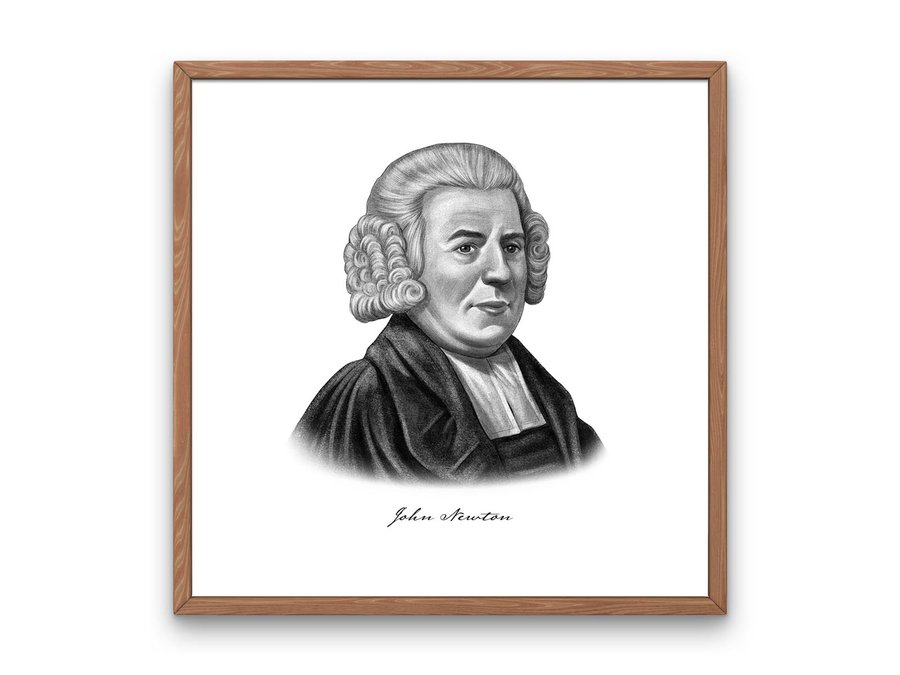
In the same way, we can rejoice that God is sanctifying us, as true believers, as well. Just as the Colossian believers were growing in grace from the moment they heard and believed the Gospel, so too are we who believe today. Therefore, each day, as we press on in the Christian life, we are gaining ground. As John Newton, the former slave ship captain and author of Amazing Grace, once wrote: “I am not what I ought to be, I am not what I want to be, I am not what I hope to be in another world; but still I am not what I once used to be, and by the grace of God I am what I am.”

“I am not what I ought to be, I am not what I want to be, I am not what I hope to be in another world; but still I am not what I once used to be, and by the grace of God I am what I am.”

John Newton

Newton rejoiced that he was no longer the callous slave ship captain and rested in the amazing grace that saved such a wretch as him. Newton realized that though he still failed, he had gained ground by God’s grace. While our story is likely different from Newton’s, we too have gained ground from when we first believed. We are not where we want to be or where we will be when we enter eternity, but we are not where we were and that deserves rejoicing and prayer. Shout on. Rejoice in the work that God has done in your life. Pray on. Pray that God would draw you ever nearer to Him and that He would shape you into greater holiness.

These are two undeniable ways that Christians are gaining ground. God is adding to our number daily through the advance of the Gospel by His Grace. God is sanctifying us day by day by His Grace. In both cases, we can and must say, “Glory, Hallelujah!” I am not arguing for some pie in the sky optimism. But I am arguing for Gospel rejoicing over the fact that God’s Word is accomplishing its purpose, that dead hearts are raised to life by the grace of God, and that we are growing in grace. We must always keep perspective by seeing the big picture of God’s work throughout the world. So, shout on, pray on. We are gaining ground. Glory, Hallelujah!