Today, we will be examining the Biblical text of Matthew 21:18-22. This text covers the cursing of a fig tree by Jesus. There is some debate as to which day of the week this event occurred. However, for our purposes, we can recognize its importance for today, regardless of which specific day of the week it occurs. The text is very visual, and it may catch us off guard in light of Jesus’ usual healing miracles. Nevertheless, we can see great truths from this text:
Matthew 21:18–22 ESV
18 In the morning, as he was returning to the city, he became hungry. 19 And seeing a fig tree by the wayside, he went to it and found nothing on it but only leaves. And he said to it, “May no fruit ever come from you again!” And the fig tree withered at once. 20 When the disciples saw it, they marveled, saying, “How did the fig tree wither at once?” 21 And Jesus answered them, “Truly, I say to you, if you have faith and do not doubt, you will not only do what has been done to the fig tree, but even if you say to this mountain, ‘Be taken up and thrown into the sea,’ it will happen. 22 And whatever you ask in prayer, you will receive, if you have faith.”
Firstly, we should notice that there is a time indicator on this text. Matthew’s Gospel tells us that this event occurred “in the morning” as Jesus is returning to Jerusalem from Bethany where He was staying. On His journey into Jerusalem, Jesus’ humanity is on display as He becomes hungry. It is an important element of our theology that we remember that Jesus is truly God and truly man. As a man, Jesus got hungry and tired. However, this is not the main element or focal point of this passage. Here, Jesus is not angrily lashing out at a poor little tree with no fruit on it. Rather, Jesus is building from historic Scriptural teaching and illustrating a great Gospel point through cursing this fig tree.
The key to understanding this passage and Jesus’ point is found in the context and Jesus’ statements themselves. We must remember that Jesus is on His way into Jerusalem to teach in the temple. Sequentially, the very next event in Scripture is Jesus entering the temple. Conceivably, and most likely, Jesus is within view of the temple mount during these events. Jesus specifically curses the fig tree for having leaves but no fruit. The idea here is that the tree looked healthy and had all it needed but did not bear fruit. As Jesus curses the fig tree, it withers immediately. In fact, the original language implicates not just withering but total destruction. The disciples question how such a thing is possible and it is in Jesus’ answer that our point will be seen. Jesus tells them that if one has faith, they will not only do what He did to the fig tree but even if they “say to this mountain” be thrown into the sea, it would be done. The illustration is coming into focus. Jesus is not telling the disciples that they could say to any mountain that it should be thrown into the sea, but rather specifically “this mountain.” What is “this mountain?” Context tells us that this mountain is the temple mount.
Therefore, we can see that Jesus’ point in cursing the fig tree is symbolic. Just as the tree appeared healthy but yielded no fruit, the city of Jerusalem had a temple that yielded no spiritual fruit but rather had become a den of thieves instead of fulfilling its intended purpose as a house of prayer for all nations. Furthermore, Jesus’ caveat to the disciples about their prayers is important as well. Jesus tells them that it is only through faith that the mountain would be cast into the sea. Through faith, the old temple would become obsolete and thrown into the sea. Through faith, we are able to see fruit in our lives through sanctification by God’s grace. Through faith, we are able to bear fruit and see others come to place faith in Christ by grace as well. Jesus is not telling us that our faith can move mountains, but that it could move the temple mount. No longer would we be fruitless and bound under the condemnation of the law but saved by grace through faith in Christ.
Finally, it is worth noting that the thing which bears no fruit in this passage is cursed. Jesus had already taught that true believers are known by their fruits.
Matthew 7:16–20 ESV
16 You will recognize them by their fruits. Are grapes gathered from thornbushes, or figs from thistles? 17 So, every healthy tree bears good fruit, but the diseased tree bears bad fruit. 18 A healthy tree cannot bear bad fruit, nor can a diseased tree bear good fruit. 19 Every tree that does not bear good fruit is cut down and thrown into the fire. 20 Thus you will recognize them by their fruits.
Faith in Christ by His grace produces good fruit. Trust in ourselves, faulty systems, or false teachings will result in total destruction and judgment. May we strive to be “good trees” that fulfill the Great Commission and bear much fruit by His grace!
This week, I have decided to post a series of blog posts related to the events of each day during Jesus’ final week of ministry before the crucifixion.
Today, we will be looking at the events of Monday during the Passion week. On Monday, following the events of Palm Sunday, the Bible tells us that Jesus enters the temple in Jerusalem. This account can be found in each of the Synoptic Gospels (Matthew 21:12-17, Mark 11:15-19, and Luke 19:45-48).
Matthew 21:12–17 ESV
“12 And Jesus entered the temple and drove out all who sold and bought in the temple, and he overturned the tables of the money-changers and the seats of those who sold pigeons. 13 He said to them, “It is written, ‘My house shall be called a house of prayer,’ but you make it a den of robbers.” 14 And the blind and the lame came to him in the temple, and he healed them. 15 But when the chief priests and the scribes saw the wonderful things that he did, and the children crying out in the temple, “Hosanna to the Son of David!” they were indignant, 16 and they said to him, “Do you hear what these are saying?” And Jesus said to them, “Yes; have you never read, “ ‘Out of the mouth of infants and nursing babies you have prepared praise’?” 17 And leaving them, he went out of the city to Bethany and lodged there.”
Historically, some have suggested that the account of Jesus cleansing the temple in John 2 with a whip is the same account. However, there are some major differences. In John’s account, Jesus’ statement is similar, but His biblical justification and teaching is different. In Matthew’s account, Jesus drives the money-changers and sacrificial animals out which results in children praising Him and the sick being healed. This infuriates the Jewish leaders who refuse to believe that Jesus is God. Jesus quotes from Psalm 8:2, to prove that He is, in fact, God. In John’s account, Jesus’ zeal for the Lord’s house is shown as a fulfillment of prophecy and He tells them of the resurrection to come. The differences in the accounts lead us to understand that John’s account is separate from the others and took place at the beginning of Jesus’ ministry and then the accounts found in the Synoptic Gospels occur at the end of His ministry.
From understanding these passages in the context, we can see that even though Jesus had previously driven them out with a whip, the Jewish leaders and those in the temple complex had returned to sin. Their corruption was unfazed by Jesus’ teaching, such that now, at the end of His ministry, He would cleanse the temple again. In fact, Jesus’ very statement about the House of Prayer becoming a “den of thieves” or “house of robbers” is a quotation from Jeremiah 7, that deals with people repeatedly returning to evil while in the temple.
Jeremiah 7:8–11 ESV
8 “Behold, you trust in deceptive words to no avail. 9 Will you steal, murder, commit adultery, swear falsely, make offerings to Baal, and go after other gods that you have not known, 10 and then come and stand before me in this house, which is called by my name, and say, ‘We are delivered!’—only to go on doing all these abominations? 11 Has this house, which is called by my name, become a den of robbers in your eyes? Behold, I myself have seen it, declares the Lord.
The temple had become a place in which corruption was the norm. Jesus cleansed the temple from being a place of commerce and corruption to a place of healing and praise. In this, we see a few simple truths that we may apply to our lives. Firstly, we see that the God’s house, now established as the church is to be a place of healing and praise. When we lose sight of this goal, we have failed. Many times, churches will become organizations that simply focus on meeting financial goals and building facilities thus becoming more business and property than church. We must instead prioritize ministering to people and praising God. Our ministry, however, must be done in God’s power. The only way we can truly see people healed is through the power of the Gospel of Jesus Christ. Thus, our priority must be to proclaim that Gospel to others and believe it ourselves. We must also praise God. When the leaders were indignant and angry with Christ for not conforming to their ideas of what He should be, God raised up children to praise Him. We too should be quick to praise Christ for His magnificent work.
Secondly, and finally, we must recognize that the recurrence of sin is an expected thing for those who are unregenerate. Without the saving power of the Gospel, people will return to sin, just as a pig returns to the mud. Thankfully, Jesus’ ministry during Passion week would culminate with His death and resurrection paying the price for our sins and reconciling us to God. Through Him, we are no longer slaves to sin, but now His children. Thus, we must recognize that we should strive to be people characterized by a focus on true healing through the Gospel and true praise for Jesus’ Name. As we remember Christ’s work on the cross, we would do well to cry out alongside the children in the temple, “Praise God for the Son of David.” (Matt. 21:15 NLT)
I know. Just saying the words “spiritual warfare” conjures up images of strange rituals, exorcisms, and chain messages about demonic activity. This is due to the concept of spiritual warfare being hijacked by sensationalist denominations that teach that there is a demon around every corner and an unfortunate reliance by American culture on anti-biblical sources such as horror films or supernatural-themed television shows to inform their thoughts on the matter. On the other hand, there are those who would deny that there is any such thing as spiritual warfare, much less the concept of demons. Many Christians recognize that there is much more and less to spiritual warfare than what the popular culture and media tell them but never fully understand a Biblically sound perspective on the topic. The fact is, the Bible frequently speaks on the issue of Spiritual Warfare. And as much as we like to think of spiritual warfare as esoteric and mystical, the Bible calls us to practice practical warfare. One of the most referenced passages of Scripture concerning Spiritual Warfare is 2 Corinthians 10:3-6. The verses say, “For though we walk in the flesh, we are not waging war according to the flesh. For the weapons of our warfare are not of the flesh but have divine power to destroy strongholds. We destroy arguments and every lofty opinion raised against the knowledge of God, and take every thought captive to obey Christ, being ready to punish every disobedience, when your obedience is complete.” (ESV) In this passage, we see that we are called to spiritual warfare with a practical application. In fact, this warfare is something that all Christians are equipped to do daily. In this passage, we can understand the practical form of warfare prescribed by understanding the setting in which spiritual warfare occurs, the strongholds we are called to tear down, and the arsenal of weapons available to us.
The Setting of Spiritual Warfare
It is important to note the setting of spiritual warfare as described in Scripture. In 2 Corinthians 10:3, Paul says, “For though we walk in the flesh, we are not waging war according to the flesh.” The plain reading of the text emphasizes that our waging of war is not according to the flesh. Thus, we often focus on that truth. However, the first part of the verse provides valuable insight as well. We walk in the flesh. Thus, at least some of the battles in spiritual warfare are fought as we are walking in the flesh while we are embodied. We do not see the spirits around us with which we war, but we recognize that the warfare has consequences for our flesh and this physical world. Spiritual warfare has spiritual and physical consequences. The demon-inhabited of the New Testament demonstrate this. Though their war was a spiritual one, fought with spiritual weapons, the recognizable effects of this war were seen in the physical world through convulsions, self-harm, and isolation. As finite human beings with limited sensory capacity, we cannot see the spirits around us. But we can clearly see the impacts of spiritual warfare and weapons around us. Though our weapons are not fleshly, and we are not of this world, we are in this world and walk in the flesh of our bodies. Thus, we must recognize that spiritual warfare is here and has real-world consequences. We must not think too much or too little of demons. This world is not all there is, and this world is not insignificant. We must prepare for battle appropriately. Peter tells us that we should always be ready to give a defense for the hope within us. Equally so, we should be prepared to see spiritual warfare impact our lives in the physical world.
The Strongholds we Destroy
Secondly, the text is abundantly clear that the weapons of spiritual warfare are empowered to destroy strongholds. In the original language, the word for “strongholds” can refer to physical castles and fortresses. Still, it can also refer to anything a person relies on or holds fast. Strong’s concordance even plainly states that the word can refer to arguments. In the case of the 2 Corinthians passage, the latter is undoubtedly true. In context, the passage clearly defines strongholds as those arguments, opinions, and thoughts that go against the knowledge of Christ. 2 Corinthians 10:5 makes this clear by using parallel language when it says that “We destroy arguments and every lofty opinion raised against the knowledge of Christ.” The verb is the same; the objects of that verb are the same. Strongholds are arguments, thoughts, and opinions that falsely represent Christ. Examples of Stronghold would include heresies, untrue statements, and false teachings about Christ. They may occur as social media posts, passing comments, or even in sermons from false teachers. For the Christian, we are called to destroy these arguments and must be aware of them in whatever fashion they appear. Anything that hinders the knowledge of Christ, especially arguments that directly attack the Lordship and Deity of Christ as it is revealed in Scripture, must be destroyed. However, there is an important distinction that must be made. We are called to destroy arguments, not people. Frequently, we see videos going viral on social media that claim someone “destroys” someone else. Our ultimate goal as believers is to destroy arguments that misrepresent Christ in the hope that the people behind such faulty arguments would be reconciled to Christ by His Grace. This distinction makes the weapons of our warfare that much more critical.
The Weapons of our Warfare
Again, pop culture has influenced many people to think of crucifixes, “holy” water, and Latin phrases as the weapons of spiritual warfare. However, these are fleshly weapons. They are physical weapons of the variety that Paul clearly says believers cannot use. The weapons of the believer are “not flesh” and “have divine power to destroy strongholds.” Apparently, to Paul, the weapon was clear. What is powerful to destroy false arguments? What can break through the walls of depravity and pierce hardened hearts of stone? There is only one such weapon. The Word of God. The Gospel. The Bible frequently attests to the power of the Gospel. God’s Word is referred to as “living and active, sharper than any two-edged sword, piercing to the division of soul and of spirit, of joints and of marrow, and discerning the thoughts and intentions of the heart.” (Heb. 4:12 ESV) Furthermore, God’s Word is “the power of God for salvation” (Rom. 1:16), breathed out by God, and profitable for reproof. (2 Tim. 3:16) Finally, God’s Word is the means by which the Holy Spirit creates faith in us. “So faith comes from hearing, and hearing through the word of Christ.” (Rom. 10:17) The Word of God is the divinely empowered weapon with which we wage war and destroy the strongholds. Further evidence of this fact is seen in Ephesians 6:17, where Paul speaks of the Armor of God. In this chapter, Paul references only one offensive weapon in the armor, “the sword of the Spirit, which is the Word of God….” Our weapon is the Word. We destroy strongholds by countering the false arguments and opinions of the world with the perfectly true, divinely inspired, and empowered Word of God. We should do this with boldness and grace. For it is only by God’s grace that we, ourselves, are not deceived by the world’s arguments. Just as we did not convince ourselves, we alone cannot persuade others. However, by the power of the Holy Spirit, God’s Word can and will. The famed Puritan expert on Spiritual Warfare, William Gurnall, once said, “God is wiser in His creatures’ weak sermons that Satan is in his deep plots.” We must remember that we wage war most effectively when God fights through us. We are most effective when we serve as a conduit through which the Word of God flows. We wage war by sharing God’s truth with those deceived. We destroy arguments that people might be saved. Paul concludes by telling us to take our thoughts captive. The emphasis on the captivity of our thoughts and the overwhelming desire for obedience shows that Paul was focused on not giving falsehood a foothold. We are to cede no ground to the enemy in this area. We take our thoughts captive by binding them with the truth of the Gospel. By God’s grace, we submit ourselves to the Word of God and are no longer conformed to the World but allow the Word to transform us by the renewing of our minds. (Rom. 12:2)
Conclusion
Spiritual warfare may seem like a mystical practice. The thing is, we need not learn any special languages or rituals. We need not buy crucifixes and “holy” water. Any believer can wage war against the enemy and destroy strongholds by sharing the truth of the Gospel with those around them. If we are saved, we know the power of the Gospel because we have seen the Grace of God work in our own lives. May we unleash the power of God for salvation by unsheathing our swords and destroying strongholds by sharing the Gospel today.
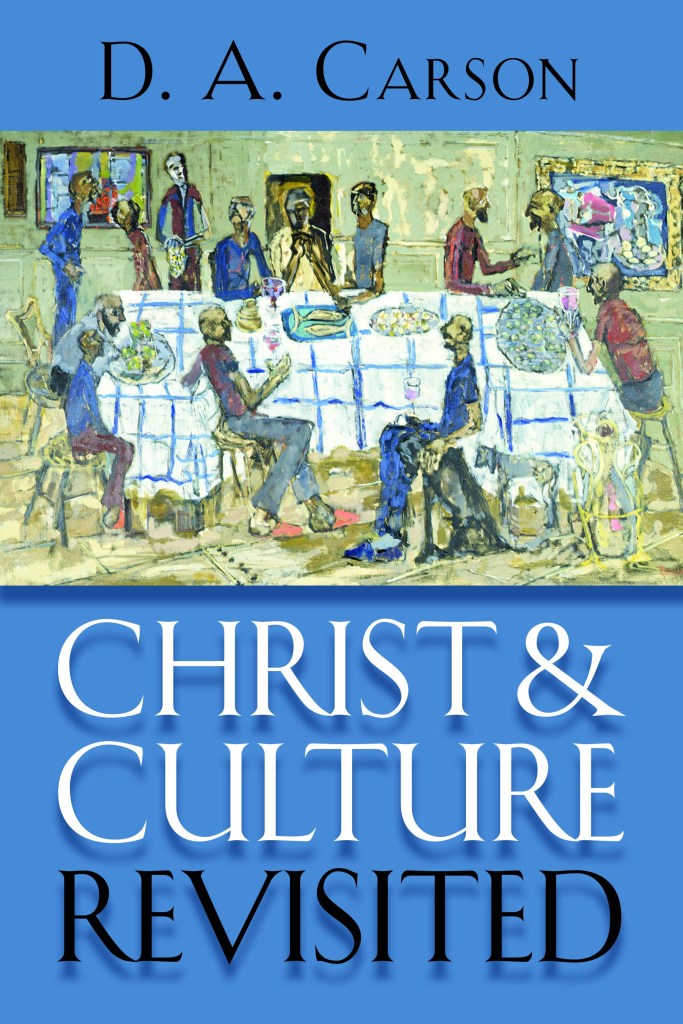
In my recent Ph.D. Seminar on Cultural Anthropology, I was required to read a book called Christ and Culture Revisited by D.A. Carson. Carson is a well-known author and is probably most known for founding The Gospel Coalition. This book’s major thrust was that the relationship between Christians, Christ, and Culture is complex. In today’s world, in which so much cultural chaos and disorder exists, Christians are frequently asking, “how should my faith interact with culture?” To answer that question, I would like to share some of the concepts that I picked up from my reading of The Bible and Carson’s work.
How do Christians navigate culture biblically?
1.We must remember to Whom this world belongs.
For Christians, it is vitally important to never lose sight of the fact that God created all things. Upon God’s creation of the universe, we are told from the Bible that God pronounces creation as “Good.” Yet, the world we live in has been corrupted by the sin of mankind. This creates a kind of tension that has impact on how we live. We must remember that it is God who owns this world. Even though the world is fallen, it is still God’s world.
“Christians cannot long think about Christ and culture without reflecting on the fact that this is God’s world, but that this side of the fall this world is simultaneously resplendent with glory and awash in shame, and that every expression of human culture simultaneously discloses that we were made in God’s image and shows itself to be mis-shaped and corroded by human rebellion against God,” Carson said. (page 49)
The Bible is clear that everything exists to bring glory to God. Thus, we must remember that, as created things, we fall into the category of things that exist to bring glory to God. So, whenever we interact with culture, or do anything for that matter, we must do it unto the glory of God. If “even the rocks cry out” as the Bible says, then we too should cry out, declaring God’s goodness in all things. At the same time, this world is fallen and in need of redemption. The world shows itself to be corrupted by sin and, as such, we should expect hostility from culture that is saturated and shaped by rebellion.
1 Peter 4:12-13 says as much: “Beloved, do not be surprised at the fiery trial when it comes upon you to test you, as though something strange were happening to you. But rejoice insofar as you share Christ’s sufferings, that you may also rejoice and be glad when his glory is revealed.” As Christians we should not be surprised that by living for the glory of God, the culture will attempt to cause us suffering. Christ warned us of such things when He said, “If the world hates you, know that it has hated me before it hated you.” (John 15:18 ESV) However, when we suffer for Christ, we bring Him glory. Shortly, there will be a day in which His full glory is revealed upon His return and every knee will bow and tongue confess that He is Lord. Remember, this is our Father’s world.
2.We must remember that our hope is in Him.
It is important to remember that our hope is in Him. This is likely not a new thought for many believers. Yet, though people will quickly confess this truth, they are equally quick to supplement (or supplant) their hope in Christ with hope in the political and cultural systems of this world. Systems which we have already established to be fallen and corrupted by sin. If we are to be thoroughly and consistently biblical, as we should, we must place our hope in Christ alone.
Carson states, “Yet while Christians, knowing that this is a fallen and broken world, not only concede such freedom but applaud it, they also know that in the consummation of the Kingdom there will be no dissent of the governed: we will have our minds and hearts perfectly attuned to the will and pleasure of our Maker and Redeemer. Our ultimate hope, therefore, can never rest in the freedoms that democracy seeks to institutionalize. Such freedoms are at best stopgap measures to mitigate evil in a rebellious world. As such they deserve the support and nurture of Christians and non-Christians alike. But that is a far cry from giving them the sort of ultimacy often assigned them.” (page 136)
The fundamental truth of humanity’s systems of government is that they will never be perfect because they are sinful systems devised by sinful people. Where governments and politics are in line with biblical truth, we should support them. Where government and politics diverge from or contradict biblical truth, we condemn them. Either way, the lens through which we view government, as with all things, is biblical truth. That truth reminds us that in God’s kingdom there will be ultimate perfection and perfect alignment with the King of Kings. Therein lies the hope of Christians. We are not of this world, and our hope must not be either.
3.We must remember that we have a responsibility to live Biblically and share Biblical truth with others.
Finally, we must remember that the Bible calls us to live as a people that are set apart. The Bible goes so far as to say “But you are a chosen generation, a royal priesthood, a holy nation, His own special people, that you may proclaim the praises of Him who called you out of darkness into His marvelous light.” (1 Peter 2:9 ESV) The King James version describes the people in 1 Peter as a “peculiar people.”
The point is that we are called, as believers, to a different life, a life governed by the Bible. Carson agrees, “These biblical realities make for a worldview that is sharply distinguishable from the worldviews around us, even where there are overlapping values. We cannot embrace unrestrained secularism; democracy is not God; freedom can be another word for rebellion; the lust for power, as universal as it is, must be viewed with more than a little suspicion. This means that Christian communities honestly seeking to live under the Word of God will inevitably generate cultures that, to say the least, will in some sense counter or confront the values of the dominant culture. But to say the least is not enough. Christians thus shaped by Scripture envision a church that not only counters alternative cultures but also seeks sacrificially to serve the good of others – the city, the nation, common humanity, not least the poor. Salt does not confront; it enhances. Believers must be the best possible citizens (cf. Jeremiah 29:7; cf. also 1 Peter 1:1; James 1:1), and that means that Christians, who are taking their cue (and thus their worldview) from outside the dominant culture, not only shape and form a Christian culture recognizably different from that in which it is embedded but also become deeply committed to enhancing the whole.” (pages 143-144) To summarize Carson’s point, Christians live differently from dominant culture because of our faithfulness to biblical commands and we are to seek to enhance culture and sacrificially serve others by following the mandates and example of Christ. We are to be different. We are not to be isolationists. Rather, we are to influence culture to the glory of God by sharing His Word, the Gospel, with those around us. We are to model Christlikeness to the culture around us. We do this by understanding the world around us in relation to its Creator, by placing our hope in God alone, and by living biblically. If Christians will be faithful to do this, we will doubtless impact our culture
As many of you know, I have the joy and privilege of pastoring Bellevue Baptist Church in Gadsden, Alabama. I love being a local church pastor and am so thankful when I see the local church fulfill her calling in the Lord. Just recently, we ordained our student pastor and I preached what is known as the Charge to the Church. Traditionally, the Charge to the Church is a sermon challenging the church to relate to the ordained pastor in a Biblical way. My charge in this service was titled, “How Can the Church Honor Her Elders?” I believe this is something that all church members in all churches could benefit from. Thus, I have decided to share it in written form.
How can Churches Honor their Elders?
The Book of Hebrews seems to answer this question well in Hebrews 13:7-18. The text says, “Remember your leaders, those who spoke to you the word of God. Consider the outcome of their way of life, and imitate their faith. Jesus Christ is the same yesterday and today and forever. Do not be led away by diverse and strange teachings, for it is good for the heart to be strengthened by grace, not by foods, which have not benefited those devoted to them. We have an altar from which those who serve the tent have no right to eat. For the bodies of those animals whose blood is brought into the holy places by the high priest as a sacrifice for sin are burned outside the camp. So Jesus also suffered outside the gate in order to sanctify the people through his own blood. Therefore let us go to him outside the camp and bear the reproach he endured. For here we have no lasting city, but we seek the city that is to come. Through him then let us continually offer up a sacrifice of praise to God, that is, the fruit of lips that acknowledge his name. Do not neglect to do good and to share what you have, for such sacrifices are pleasing to God. Obey your leaders and submit to them, for they are keeping watch over your souls, as those who will have to give an account. Let them do this with joy and not with groaning, for that would be of no advantage to you. Pray for us, for we are sure that we have a clear conscience, desiring to act honorably in all things.”
From this text we can see 6 specific ways that the church can honor their elders:
#1: IMITATE THE GOOD ONES.
In verse 7, the author of Hebrews has the reader to consider their leaders and the outcome of their life. The author further encourages the reader to imitate the faith of those elders/pastors/shepherds/overseers that had lived faithful lives and borne fruit for the Gospel of Christ. For the modern church, we are called to examine the leaders of the church and, if they are faithful, imitate their faith and faithfulness. For the church member, this not only includes remembering past leaders, but also current ones. This involves following the lead of the church elder or pastor in faith. If the pastor of the church is leading the church into a challenging emphasis or initiative such as church planting, increased mission giving, or deep doctrinal teaching, the church should respond by careful attention and faith rather than knee-jerk reactions and fear. In short, where there are faithful leaders, there should be faithful followers. If your pastor is preaching the truth, imitate him and his teaching as he imitates Christ.
#2:DO NOT BE LED ASTRAY.
As a pastor, the scariest Bible verse in Scripture to me is that of James 3:1, which says “Not many of you should become teachers, my brothers, for you know that we who teach will be judged with greater strictness.” This is sobering and it reminds the elder of the church to be faithful and watchful in relation to their congregation. However, not all pastors do this. There is a growing group of false teachers. With the rise of social media and the ability for anyone, anywhere, to get any message out at any time, comes a plethora of new ways for false teaching to spread like a wildfire. Whether it is a few seconds of bad teaching on TikTok or a hour of heresy from a televangelist, false teaching is abundant and available any time of day. The faithful local church pastor, unlike the TV preacher, has prayed over his congregation and is faithfully preparing each week to preach the truth of which he is convicted to his people. If you want to bless and honor your church Pastor, do not be led astray. The author of Hebrews reminds us that Jesus Christ is the same yesterday, today, and forever. Thus, we should not be carried away with various or strange doctrines. Your hearts should be established in grace rather than the things of the world. Sit under the teaching of your pastor with open hearts, eyes, and ears. Of course, you must filter every teacher through the Word of God, even your pastor. But if your pastor is preaching the truth do not depart to the entertainers and ear-ticklers. This is especially important as false teaching leads to false worship. Hold fast to the doctrine of Christ and continually offer the sacrifice of His praise rather than the doctrines and praise of men.
#3: DO NOT NEGLECT TO DO GOOD.
This deals with the doctrine of sin. Sin is not only doing that which we know to be wrong, but it is also not doing what we know to be right. You can bless your pastor by doing good. The Bible tells us that God is well-pleased with sacrifices of doing good and sharing. Just as a parent is so proud when they hear of their children doing good things, so too is a pastor proud when he hears of his church members doing good things. So don’t forget to do them! God is pleased when we work together to do good. The Bible also says that pastors are worthy of double honor. So when you get the chance, remember that small pieces of encouragement do the pastor a world of good. A simple hand-written note with a few encouraging words does more good than you know.
#4: OBEY AND SUBMIT.
Verse 17 clearly says to obey and submit. This might seem self-serving for a pastor to write that the church can best honor their pastor by obeying and submitting. However, remember that these are God’s words, not my own. Notice though the reason why. The author says that people should obey and submit because the church leaders are those who watch over their souls as people giving an account. This goes back to the earlier point about being led astray. Your pastor will give an account for their faithfulness regarding their shepherding of you. The TV pastor will not. The Instagram quote will not. But your pastor will. So trust that if your pastor will give an account for how they shepherd you that it makes sense for your pastor to shepherd you to the best of his ability based on his Biblical convictions. Thus, if he asks you to do something, it likely comes as a result of his pouring over the Scriptures and bathing the situation in prayer. This means that when the faithful pastor tells you something, you should obey trusting that he is mindful of the gravity of the situation and is following his convictions to the best of his ability. Speaking as a pastor, it is my great joy to see a baptism, seeing people profess their faith. On the other hand, there is no greater pain than seeing church members live their lives in a manner that is contrary to Biblical truth. I love seeing Biblical teaching and doctrine click for people. I hate seeing it when people ignore it. This is because any faithful pastor loves his congregation and wants the best for them. Thus, the church is called to obey and willfully submit to the leadership.
#5: DON’T MAKE IT HARDER THAN IT HAS TO BE.
The fact of ministry is that it is hard. Ministry is a people-centric vocation and dealing with people is not always easy. The author Hebrews shows in verse 17 that pastors should lead with joy and not with grief because it is unprofitable for anyone if they lead with grief. As I shared earlier, there is no greater joy than the joys of ministry and faithfully serving the Lord. Ministers have a responsibility to love their church and serve it with joy. However, the church is equally called to serve with joy and submit with joy. Your pastor is likely working as hard as they can and still struggling to get everything done. Especially if your pastor is bivocational, in which case it is almost guaranteed that he is overworked and underpaid. One of the most painful statements for your pastor to hear is “People are saying.” As much as you can, make it easy for your pastor to serve you with joy by being a joy to serve. I am thankful that everywhere I have served, it has been a joy to serve the vast majority of every one of those congregations. When church leadership and membership serve each other with joy and keep the focus of glorifying God and leading others to do the same, something beautiful occurs and much fruit will result.
#6: PRAY FOR YOUR LEADERS.
This should be a no-brainer. Verse 18 calls for prayer. The author says, “Pray for us;” why does he say this? Because the leaders desired to live honorably in all things. Pray for your church leadership as they seek to live out their Biblical convictions honorably. Pray for them because spiritual warfare is real and they face tremendous pressure. Pray for them that The Lord would use them mightily to reach the community with the Gospel and lead their congregations to do the same. My grandmother used to always say that prayer is one of the only things you can do for someone that costs you nothing. As such, it costs you nothing more than a few moments of time to pray for your church and its leadership, but the rewards are massive.
In conclusion, remember that faithful elders are worthy of double-honor. This article assumes that elders are faithful to the Word and their church and provides practical Biblical ways to honor these faithful church leaders.
No Christian can downplay the importance of church history. In order to know where we are going, we must have an idea of where we come from. Historic theology and the trials, tribulations, successes, and failures of other faithful Christians provide us with many lessons and illustrations to help us along our way. Regardless of anything else he may have said, Philip Schaff has a wonderful quote on the importance of church history asking, “How shall we labour with any effect to build up the Church, if we have no thorough knowledge of her history, or fail to apprehend it from the proper point of observation? History is, and must ever continue to be, next to God’s Word, the richest foundation of wisdom, and sweet guide to all successful practical activity.” Thus, we recognize that church history is of vital importance to the Christian and the Christian church.
As a Southern Baptist, church history conversations are usually limited to discussions of The Reformers and the Conservative Resurgence. Gather any group of Baptists, and the conversation will invariably turn to the regaling of stories of Martin Luther and John Calvin, Paige Patterson and Adrian Rogers, and Charles Spurgeon. I believe wholeheartedly that each of these men should be studied and are well worth our time and consideration, with each contributing massively to their respective fields. I have a book from 1731 containing Luther’s sermons in German, and Spurgeon (one of my personal favorites) could fill a lifetime of study. However, there is so much value to be had in examining the history of Christ’s church outside of just these men.
For instance, we would do well to study the early church, to study Augustine and his rebuttal of Pelagius, Hus’ faithfulness, and the faithfulness and zeal of the English Baptists such as Andrew Fuller and John Gill, the holiness of the Puritans, and the depth of Edwards. One would do well to study the obscure histories of the church. But, there is one area of church history that is even less obscure, that may be more valuable. That history is the history of your own local church.
At the church that I currently serve, we are fortunate to have books, records, photographs, and historic drawings detailing the history of our church. We are a relatively young church (94 years in existence), but our history is rich. Whether your church is a few years old or has centuries of history, there is much to learn. By examining your church history you will doubtless find examples of faithfulness and failure. However, you and your church will learn much from both. Our church has seen faithful servants persevere through tough times and it has seen conflict. Both should motivate us to further faithfulness and unity moving forward. Though many things are different between eras, the major issues that face the church are not. Every generation deals with hostility toward the Gospel in some way, every generation faces doctrinal debate, every generation has worship preferences, and every generation has generational divides. By studying the past of our own local churches, we are able to see how Biblical truth will sustain when followed and how sin will divide where truth is neglected. Additionally, where faithfulness is found, it is found in familiar faces and families rather than historically distant figures.
Studying your church’s history is a wonderful accent to the history of the Church as a whole. We should not neglect to study either. By knowing the history of the Church Universal and your own local church, you will be better equipped with illustrations and affirmations of Biblical truth. Though history is not necessary to understand God’s word, history always shows how God is faithful to each generation. By seeing God’s hand of providence in history, we are reminded that as the Psalmist says, “Your faithfulness endures to all generations.” (Psalm 119:90 ESV)
Just recently, I started a new Wednesday night series at our church walking the people through our Church Statement of Faith. It has been a tremendous blessing as we are able to see the beauty of Scripture and truth as well as the historic belief of our church’s founding members. I rejoice greatly that Bellevue has such a robust confession that we can study with any depth. This is not the case at a great many churches.
The first place I look on any church’s website is the “Our Beliefs” section. I lament that lately I have seen less and less good church confessional statements and more and more of what R.C. Sproul called studied ambiguity. Churches are quick to point out how the visitor will feel in the service, what style of music to expect, and promise an accepting dress code and relevant message. The problem is these churches have given the visitor no idea of what they believe. Are we preaching Christ or dress codes and warm, fuzzy vibes from a preacher in ripped jeans and sneakers? The thing for me is that I don’t care about dress code (as long as its modest and appropriate) so long as the doctrine is sound. If Christ is our message, He must be made known abundantly and clearly in everything we do, including our websites. If He is not the message, then you are preaching a false Gospel.
So many churches have watered down their beliefs statement to a few sentences where they say that they believe in Jesus for salvation, but in no way outline what that means or the basis for that belief. Other churches simply espouse a denominational confession. As a lifelong Southern Baptist, I have seen multitudes of churches simply list The Baptist Faith and Message as their confessional statement. When presented for the revision in 1999, the writers of the Baptist Faith and Message 2000 said, “we do not regard them as complete statements of our faith, having any quality of finality or infallibility.” This comes directly from the Preamble of the statement, which goes on to recommend that Baptists should develop confessions of faith that are wise and expedient at any time.
In a 9 marks roundtable event after the 2018 SBC Convention Meeting, I heard Dr. Al Mohler make a profound statement about the Baptist Faith and Message 2000. He basically stated that it was intended to be a “big tent” statement, one that provided the minimum standard of cooperation. He went on to say that we can guarantee that all Southern Baptists believe more than the BF&M 2000, but none believe less. Personally, I believe that the BF&M2000 is an excellent standard for cooperation, but not for conveying the specific convictions and teachings of a church.
I believe that a deeper, clearer, and more robust confession is an asset to a church in many ways. First, a robust confession sets the standard for teaching. When someone looks to your church, they will know what to expect in regard to teaching. Instead of being promised relevancy, visitors are promised doctrinal standards of teaching and preaching. Secondly, it prevents division. So many people cite doctrinal differences as reasons for church division. Could these divisions, heartaches, and splits not be avoided if everyone knew what to expect from the outset? Thirdly, robust confessions lead members to robust personal confession. Just as church members follow the example of the pastor in prayer and devotion, so too will they follow the church confession in depth and understanding. Our confession conveys what is important to us. How can we not specifically address Soteriology, Trinitarian theology, Ecclesiology, Doxology, Pneumatology, and on and on?
Ultimately, the failure to develop a rich confession and the tendency to be more ambiguous comes from a fear of offending someone and a desire to draw large amounts of people who would otherwise be turned off by your doctrines. This is seen in the same way that many seeker sensitive churches remove the denominational name from their church. A faithful retired pastor who attends our church once said, “That name “Baptist” means something.” Its true. But many churches are scared to mean anything out of fear of losing something. What a shame. These churches should repent! A church confession should be so Scriptural and specific that someone may be saved in reading it. These attempts to appeal to the masses are antithetical to the calling God has placed on His church. Romans 1:16 says, “For I am not ashamed of the Gospel for it is the power of God for salvation to everyone who believes…” We must not be ashamed of that which will save. We must be bold to proclaim it. We must recognize that we are called to know Him and make Him known and to glorify Him and lead others to do the same. I believe that we best glorify Him by being clear about who the Bible says He is and how the Bible tells us to respond.
As children, we are taught to recognize that a chameleon is a funny looking lizard with weird eyes. However, its most recognizable characteristic is its ability to change colors in order to blend in with its surroundings. Chameleons do this in order to protect themselves from danger through the use of camouflage. Within our world today, there are people who claim to be Christians or “church-goers” and who say that they believe the Bible when, in reality, these people are simply convictional chameleons.
We have all had an experience with a convictional chameleon at some point. The point is, there are people who, just like chameleons, allow their convictions to change to fit present company. Instead of changing colors, the convictional chameleon will change their standards of morality in order to blend in and prevent pushback. For example, a believer who claims to be against foul language may use cuss words around others that use foul language in order to fit in. Another idea would be that of recreational drug use around other drug users or dressing immodestly in order to fit in with the latest fashion trends. The list goes on and on. They fear the pushback of societal norms as predators, and they fear isolation or accusations of prudishness for their convictions. Just as the convictional chameleon blends in around the lost, they too, will blend in with the Sunday morning church crowd. They say the right things, dress the right way, and go through the motions so as not to stand out. This is their nature in all things, and it is a sinful nature.
Unfortunately, the convictional chameleon is not an endangered species. In fact, they are quite populous. The only way to combat this is to be convictionally constant, remaining firm in convictions and consistently living for Christ regardless of surroundings and settings. The Bible tells us that no man can serve two masters. We, as believers, must remember that Christ alone must be our master and that no part of us can serve this world. We are either all for Christ or all for the world. There is no middle ground, there is no blending in, there can be no compromise. We must stand strongly upon our convictions to do what the Bible commands even if it costs us everything. Only then, will we impact the world for the kingdom. Don’t be a chameleon. Stand out and stand up for Christ with constant conviction and devotion.
For more information about Rev. Colt Hudson or his ministry at Bellevue Baptist Church, please don’t hesitate to contact us!
There are very few works of non-fiction that read as though they are fantastic narrative. There are a select few that have the ability to ignite the imagination, stoke the fires of the intellect with an academic challenge, and inspire the heart to greater heights. R.C. Sproul: A Life by Stephen J. Nichols easily meets these criteria. The work is a biography of one of the greatest battlefield theologians of the twentieth and twenty-first centuries. For decades, the theology of America and its largest denominations were radically steered and shaped by the life, ministry, and work of R.C. Sproul.
As I read through Nichols’ work, I was struck by three distinct qualities in R.C.’s life that I aspire to. These qualities run the length of his life and seem to appear in everything that he did. The first is that of passion. Everything that R.C. did was done because he cared about it. There seem to be no hollow actions or words with Sproul, as even his humor had a purpose. But all that was done, was done out of a driving passion. As a child, his passion was seen in his love for his family and his beloved Pittsburgh Steelers and Pirates. As an adult, Sproul was known for his teaching and conviction as well as his devotion to Vesta.
Sproul is recognized for his communicative abilities and this is easily seen, felt, or heard when one interacts with any of Sproul’s work. I believe that his communicative ability sprung from his passion. His passion for the character and characteristics of God, namely God’s holiness, aseity, and sovereignty, drove R.C.’s writings and teachings. His passion to see the lost come to know God drove his preaching. His passion for life lived unto the glory of God and the fullest drove his relationships. His relationships were strong and deep, his teaching stronger and deeper. In all of these areas, we see Sproul to be a man of great passion.
It was Sproul’s passion for God and Scripture that led to his other qualities. Another admirable quality of Sproul’s was that of his precision. In a world in which so many theologians, politicians, and the culture as a whole embrace what Sproul called “studied ambiguity,” R.C. Sproul stood for precision and exactness. Never one to back down or pull punches, Sproul embodied and demanded precision in everything he did. Sproul was influentially involved in a number of theological crises and movements as one who would often be called on to develop, lead, and respond to threats against true and right doctrine. Sproul went to war in the seminary classrooms as a student combatting liberalism in his professors and classmates. This war continued as Sproul led the International Council on Biblical Inerrancy and drafted the Chicago Statement. The war would rage on as the learned general would go toe to toe with even dear friends as he fought against the Evangelicals and Catholics Together Statement. Throughout his life, Sproul fought for theological precision and accuracy. It was his dedication to this precision, and the correctness that he was precise about, that would ultimately inspire a generation and lead to major movements such as the Conservative Resurgence of the Southern Baptist Convention, The “Young, Restless, and Reformed Movement,” and the inspiration and education of countless faithful church leaders today.
However, precision and passion mean nothing if they are abandoned. In a day in which so many giants of the faith are plagued with spinelessness in the face of conflict and moral failure under examination, R.C. Sproul persevered with faithfulness. Even when his precision and passion for the Gospel would cost him dear friendships, Sproul remained faithful to his convictions rather than compromise the Gospel. He remained faithful to his dear wife Vesta. He remained faithful to his ministry. He ran the race well and he finished the race well, something which cannot be overstated in the days of rampant moral failure. His ministry is often aspired to by so many who would seek the same platform and legacy. However, greater than his platform, we should aspire to his character, integrity, and passion for Biblical fidelity. His life shows that a real ministerial legacy is left in the faithfulness to the Word of God. In this area, we see that Sproul’s teaching will persevere as well.
R.C. Sproul: A Life captures all of this and so much more. I commend Stephen Nichols for an excellent biography. It is one of the best that I have read. I felt all the feelings, I was inspired, and I was convicted. Seldom is a biography classified as a page-turner, however, Nichols’ work is just that. If you want to be encouraged and convicted, you must read this book. Every pastor, nay, every believer should take up this biography and read. You will not be disappointed.






 Colt Hudson