Throughout 2025, a multitude of books crossed my desk and nightstand. While each had a different degree of impact on my personal and professional growth this year, I wanted to take a few moments to highlight five works that stood out to me for their usefulness and impact.
Haunted Cosmos: Doing Your Duty in a World That’s Not Just Stuff by Brian Sauve and Ben Garrett.
This book, which sprang from one of the most popular and interesting Christian podcasts today, lays out the case for an enchanted reality and our role in it. As the subtitle suggests, Sauve and Garrett argue that secularism has tried to flatten reality into simple materialism, but God made a world that is not merely stuff. The authors write beautifully about nature, creation, and some of the wildest things imaginable from a Christian worldview. They seek to provide a cohesive, consistent Christian answer to the world’s questions about high strangeness, such as: What is Bigfoot? What about the Giants? Are ghosts real? Are aliens demons? While this may sound outlandish, the book actually paints a compelling picture of seeing beauty in the everyday, routine elements of creation before theologically explaining the Christian’s duty in a spiritual world. While there are some elements of this book where I diverge from the authors’ views, it is an entertaining, thought-provoking, and sanctifying read. I highly recommend this book (and the podcast).
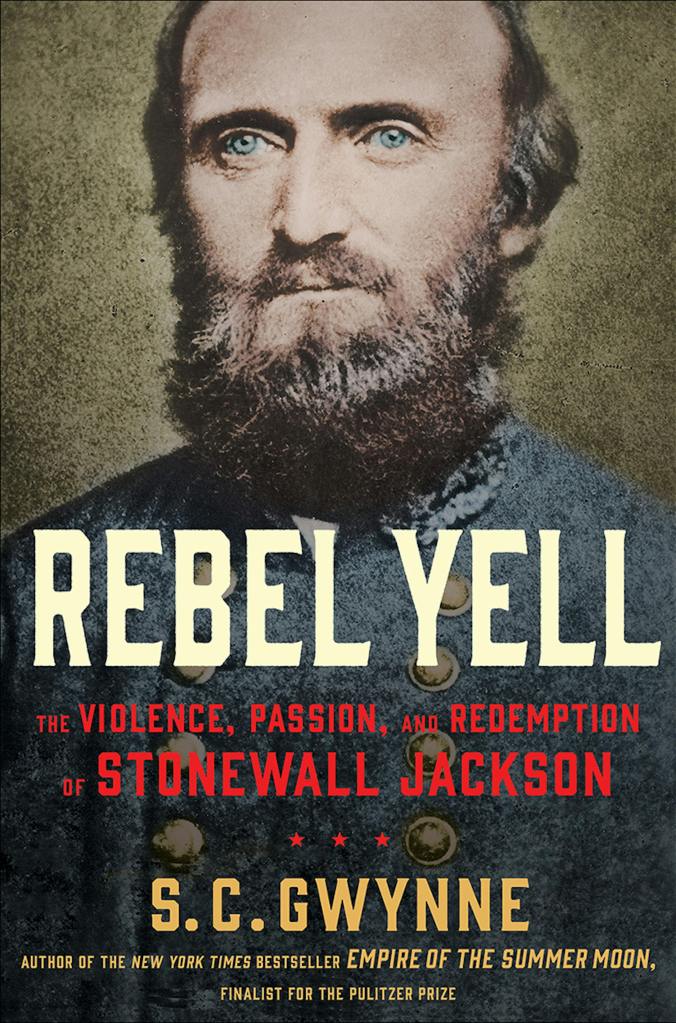
Rebel Yell: The Violence, Passion, and Redemption of Stonewall Jackson by S.C. Gwynne.
This book is an excellent biography of Civil War General Thomas J. “Stonewall” Jackson. The book traces Jackson’s life from being essentially orphaned through his legendary military career to his death. The legacy and importance of Jackson cannot be understated in Civil War history. Jackson is a far more complex person than many understand, and Gwynne highlights his military exploits by showing how Jackson’s character and experiences uniquely prepared him to lead with excellence. This is by no means a hagiography, and Gwynne also reveals Jackson’s inconsistencies and areas of stubbornness. Chief among all of Jackson’s other traits was his unshakeable belief in the absolute sovereignty and providence of God. To study Stonewall Jackson requires studying Providence, because that doctrine drove everything else Jackson did. It is easy to tell why this work is a New York Times Bestseller, as it is, in my opinion, one of the best Civil War biographies I’ve ever read. This is a must-read for leaders, history buffs, and anyone interested in how religion shaped leadership in the Civil War. It was my favorite book of the year.
Consider the Lillies: Finding Perfect Peace in the Character of God by Jonny Ardavanis
This book confronts one of the most prolific issues in our society today: anxiety. In an increasingly anxious society, Ardavanis lays out the biblical path to finding peace. This book is an excellent read rooted in the loving, kind, and providential care of the Lord. This book is especially helpful for any sort of biblical counseling role who works with people experiencing anxiety. If you are anxious or struggle with anxiety, this book is a must-read. It was one of the most impactful books I read this year from a counseling and personal application standpoint.
Redemption Song: A Primer on Singing for the People of God by Sean DeMars
This booklet is on the list out of its sheer practicality. In this work, DeMars uses an expositional approach to the Song of Moses to instruct the people of God in congregational singing. Personally, this book became required reading for every member of our worship team at my church. If you are curious about biblical principles of worship that will edify and uplift the church, this booklet is an excellent starting point. It is incredibly accessible, and an easy read.
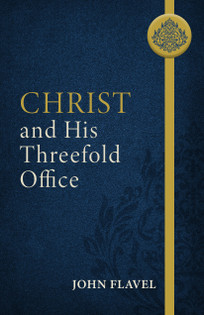
Christ and His Threefold Office and Christ Humbled Yet Exalted by John Flavel
These works are a divided version of John Flavel’s Puritan Christology classic, The Fountain of Life. These works are short versions of Flavel’s Christological sermons focusing on Christ’s threefold office of Prophet, Priest, and King, and the humility of the incarnation and the exaltation of Christ’s resurrection and ascension. Personally, these were used for me as devotional reading throughout the year. The works are a great introduction to Puritan writing that will hone your affections for Christ. Highly recommend.
Honorable Mentions
The Care of Souls by Harold Senkbeil
Emotional Sabotage and Leadership by Joe Rigney
The Warrior Poet Way by John Lovell
The Art of Prophesying by William Perkins
Conclusion:
Taken together, these books were simply the ones that stayed with me after the year was over. They were helpful and clarifying in different ways, whether by sharpening how I see the world, reminding me of God’s providence at work in history, addressing everyday anxiety, strengthening our church’s worship, or directing my attention back to the person and work of Christ. I share them not as a program to follow, but as a short list of reads that proved genuinely worthwhile in 2025 and may be worth your time as well.
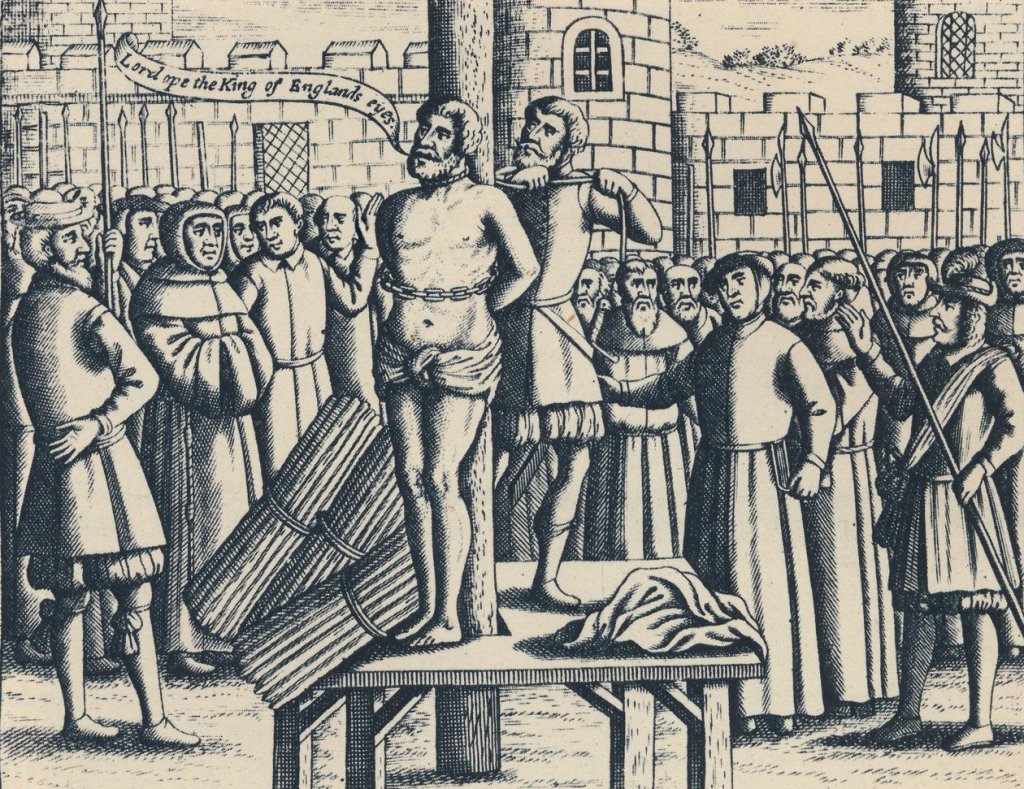
489 years ago today, on October 6, 1536, in the small Flemish town of Vilvoorde, a man was led from his prison cell to a wooden stake where he was strangled and burned. His crime? Translating the Word of God into English.
William Tyndale was born around 1494 in Gloucestershire, England, and studied at Oxford and Cambridge. There, his soul caught fire with one conviction: every plowboy in England should have access to the Word of God. In fact, Tyndale’s conviction on this was so strong that when a clergyman once told him that it would be better to be without God’s law than the pope’s, Tyndale replied:
“I defy the Pope and all his laws. If God spare my life, ere many years, I will cause the boy that driveth the plow to know more of the Scripture than thou dost.”
Denied permission to translate Scripture in England, Tyndale fled to continental Europe. In 1525, his English New Testament, translated directly from the Greek, was printed in Germany and smuggled into England in barrels and bales of cloth. The authorities burned every copy they could find, but they could not stop the spread of the Word.
Over the next decade, while in exile, Tyndale revised his New Testament and translated much of the Old Testament, including Genesis through Deuteronomy and parts of Joshua and Chronicles. However, in 1535, he was betrayed by a false friend, Henry Phillips, and was arrested near Brussels, where he was imprisoned for over a year. Even in confinement, he continued to study and write. When the sentence of death was pronounced, he stood firm.
At the stake, before the strangler’s cord tightened, he cried out:
“Lord, open the King of England’s eyes.”
And God answered that prayer. While the Lord did not radically save Henry VIII, He opened the King’s eyes, causing him to use his power to advance the Word rather than suppress it. Only three years later, Henry VIII authorized the publication of the Great Bible, the first English Bible to be placed in every parish church in England, a translation based mainly on Tyndale’s work. Even the plowboy could now read the Word.
The Meaning of Tyndale’s Prayer
Tyndale’s dying words reveal more than frustration or bitterness. They display a profound theology of God’s sovereignty, illumination, and the unstoppable advance of Christ’s Kingdom.
1. He Believed in the Power of the Word
Tyndale’s great burden was not for his own name, but for the Word of God to run free. He was convinced that Scripture is the ordinary means by which the Holy Spirit opens spiritual eyes. His final prayer was not for release, but for the Word’s triumph.
2. He Believed in God’s Sovereignty over Kings
Rather than curse Henry VIII, Tyndale prayed for him. He understood that the hearts of rulers are streams in the hands of God (Prov 21:1). His prayer was an act of faith in the Lord who governs nations, reforms churches, and bends empires to accomplish His perfect will.
3. He Believed That the Kingdom of Christ Would Prevail
In Tyndale’s day, it seemed impossible that England would ever have a Bible in her own tongue. But faith sees beyond impossibility. His prayer looked past the flames to the future, to a day when even the plowboys would know God’s Word in their heart language.
Lessons for the Church Today
The church of our generation stands in the long shadow of William Tyndale’s pyre. His example calls us to courage, conviction, and confidence in the Word of God. And we can learn a few lessons today:
1. We Must Treasure the Word
Tyndale gave his life so we could hold a Bible in our own language. Yet in our day, Bibles gather dust while screens glow bright. The Word that cost him everything often costs us nothing. Let us return to a reverent, joyful knowledge of Scripture by reading, meditating on, and obeying it as the voice of the living God. Part of this lesson is that God’s Word must not only be available but also obeyed. We do not honor Tyndale’s memory merely by possessing many Bibles. We honor him by being people of the Book. We are to be people who read, teach, and apply the truth of the Bible in every sphere of life.
2. We Must Proclaim the Word
Tyndale’s work was evangelistic to its core. He wanted every man, woman, and child to hear the gospel clearly. The church must recover this passion, not for clever phrases or cultural applause, but for clarity of truth. We need men and women who will speak the Word plainly, even when it offends.
3. We Must Pray for the Powerful
Tyndale’s final prayer was not for revenge, but for repentance. “Lord, open the King of England’s eyes.” We should pray that kings, presidents, and magistrates would see the truth of Christ and govern under His lordship.
4. We Must Endure for the Long View
Tyndale never saw the fruit of his labor. The Great Bible, the Reformation in England, and eventually the King James Version all came after his death. Faithfulness sometimes means sowing seeds whose harvest you will not live to see. The Word of God is not bound; our calling is simply to obey and trust God with the fruit.
Conclusion
The story of Tyndale’s life is not just history. It is a testimony to the power of the Word of God and the courage of those who love it. The Reformation was not simply a theological debate. It was a war over authority: Who speaks for God? The church of Tyndale’s day claimed that only the clergy could rightly handle Scripture. Tyndale declared that the Bible itself speaks with divine authority, and that every Christian has the right and responsibility to hear and obey it. That conviction cost him his life, but it also changed the world.
Five centuries later, the prayer of a dying translator still echoes:
“Lord, open the King of England’s eyes.”
It was a plea for illumination, for the Word to govern hearts, homes, and thrones. And God answered according to His will. May He answer again in our day. May He open the eyes of our leaders to truth. May He open the eyes of His church to obedience. May He open the eyes of our nation to Christ. And may He open our own eyes, to see that the same Word still speaks with living power, calling us to repentance, courage, and joy in the King who reigns forever.
Normally, during our Sunday services, we do not vary from our order of worship. But, after the past week’s events, after much prayer, our elders decided to do something different. We felt that we could not let the moment pass without speaking clearly about our nation, our calling as Christians, and the courage required of us today. The following is an adapted version of the statement that I shared with our congregation on Sunday morning regarding the assassination of Charlie Kirk:
A Sobering Moment
As you know, Charlie Kirk was killed for his faith last week. He was a man who lived boldly under the Lordship of Christ, not only in private but also in public, not only in the church but also in the realm of politics and culture. And because he would not bow to the lies of our age, he was hated and ultimately martyred. I want us to be clear about why.
Faith and Politics: An Inseparable Connection
The Christian life necessarily affects every part of who we are, including our politics. Many people assert that it is possible to profess Christianity while embracing any political viewpoint they like. This perspective suggests that one’s faith and political beliefs can exist independently, with no necessary connection between the two.
However, the events of the past week reveal the faulty nature of this notion. The reality is that our beliefs shape every aspect of our lives, including how we engage with the world around us. As Christians, our calling compels us to let our faith inform our convictions, actions, and even our stance on political matters. Indifference or neutrality is not an option when the truths of the Gospel are at stake.
Do not buy the lie that you can be a Christian and believe whatever you like, or that it doesn’t matter what party you support; all of it matters. The Bible tells us that there is one holy God, that He created us male and female, that marriage is the union of one man and one woman, and that every human life is precious and worthy of equal protection. God has given us principles that shape reality and principles for living that must shape the way we think, vote, and act. If we are serious about living for Jesus, then there is no area or sphere of our lives where He is not Lord. He is just as much Lord over our politics as He is over our salvation.
Charlie Kirk believed that. He stood on those truths. And because he did, because he lived as a witness to Christ’s Lordship over all of life, he was killed by someone who hated those very truths. That makes Charlie a martyr. The word “martyr” means witness, and Charlie bore faithful witness to God’s truth in life and in death, and I am thankful for his bold example. His death has already had more impact on the believers of our nation in these past days than we have seen in many years.
For many of us, martyrdom is something we associate with distant lands: Christians in the Middle East, Asia, or under brutal dictatorships. But now, martyrdom is here. It is on American soil. And that means something profound for us: If they could kill him for his witness, they could kill us, too.
What This Moment Demands
In light of these events, three things are clear:
Easy-believism will not hold. The health-and-wealth gospel and “feel-good Christianity” crumble under persecution. What our nation desperately needs is the blazing hot gospel of Jesus Christ, the truth that saves the soul, warms the heart, and moves the feet into bold obedience.
There is no neutrality. Fence-sitting is not an option. Silence and cowardice are what brought us here. To shrink back now would be to fear man rather than God. It is not that we are going out of our way to offend; we are simply standing upon the truth of God’s Word and saying, “Thus saith the Lord.”
Following Christ has a cost. The Apostles knew it. The Reformers knew it. The Puritans knew it. The Covenanters knew it. Global Christians today know it. And now we must know it. Christianity in America is no longer comfortable. There has always been a cost for following Christ; we have simply been blessed to have been spared from much of the physical cost. We must be willing to give our lives for the sake of the Gospel. Prayerfully, it will not come to that, but we must be ready and willing to give our lives for the Gospel.
Power, Love, and Self-Control
So how do we respond to all of this? In moments like this, our response must be dictated by the words of Scripture.
“For God gave us a spirit not of fear but of power and love and self-control.” —2 Timothy 1:7
Not fear. Fear is not from God. We do not have a spirit of fear. We do not cower. We do not tremble. Why? Because our God is sovereign. He ordains all things. He takes what is meant for evil and turns it for good. He works all things for His glory and our ultimate good. We do not fear, for as Paul’s letter to the Philippians teaches, to live is Christ and to die is gain. The worst they can do to us is kill us, and that is a promotion. If you find yourself afraid to speak boldly for Christ, or fearful about raising children in such a dark and hostile age, remember this: that fear is not from God. Brothers and sisters, do not be afraid.
Instead, power. The very power of God is with us, emboldening us to speak, to act, to stand. And so, boldness should mark us. Power is not just the opposite of fear; it is also the opposite of weakness. Too many people will say, “There’s nothing we can do,” or they’ll rage for a week on social media and then slip back into silence. Our response as believers should not be temporary outbursts, but consistent boldness demonstrating the power of God in us.
And love. We overcome hatred not with bitterness, but with a greater love: love for God, His truth, and His people. Let the world see our loves, and let them know that our love is stronger than their hatred. Let them see that we are passionate about the Lord. Let them understand that we love God and His truth more than we love our own lives. Let them know that we will not back down. Not because we hate them, but because we love God and we desire to see people follow Him as Lord by His grace through the Gospel.
And self-control. Scripture says, “Be angry, and do not sin.” Just as many are fearful or sad, there are very many of us who are angry. Angry that this could happen, angry that a wife is a widow and that two children are fatherless. Angry that things are the way they are. It is important to note that anger is not a sin, but it can easily become one. Hence, the Scriptural warning to “be angry and do not sin.” As one pastor has rightly noted, righteous anger that does not lead to righteous action is like dairy; it quickly curdles into unrighteous anger. We cannot be led by emotions, as they are cruel masters. We must be led by the truth of God’s Word, steady and firm, walking in obedience. So, what do we do with this anger? We pray. The Psalms are full of imprecations. This is simply a prayer asking the Lord to deal with the wicked. Psalm 58:6 says, “break the teeth of the wicked O Lord.” This is a prime example of an imprecation. It is perfectly good for us to pray that God would judge the wicked. So, we pray, but we also proclaim. We allow that passion and zeal from our anger to merge with our power and love so that we proclaim the truth of the Gospel in love with boldness. But we do not allow our anger to lead us into sin. Instead, we demonstrate the self-control of those led by the Holy Spirit.
How Then Shall We Live?
This is no time to check out. This is the time to lock in. Men, rise up in faith. Lead your families with courage. Defend the defenseless. Serve the church with zeal. Women, stand strong in love and joy. Support your families. Nurture the next generation. Serve the church with gladness. And together as the church, let us pray, proclaim, and persevere.
A Call to Prayer
Let us grieve, but not as those without hope. Let us resolve to stand. Let us bear witness boldly. Let us live and, if called upon, die under the Lordship of Jesus Christ. And let us pray. Pray for our nation. Pray for the Kirk family. Pray for the church. Pray for courage, holiness, and faithfulness in our time. May God raise up a generation of believers who will not fear, but who will shine as lights in this dark age.
In a few days, my wife and I will pack up our three small children and move to Ennis, Montana, where I will serve as the Pastor of Madison Valley Baptist Church. For the first time in my life, other than when I moved to college a few miles south of the Alabama border in Florida, I will be moving outside of Alabama. As we shared this news, many people asked, “Why?” On the surface, their question makes a great deal of sense. Why would we pack up our family to move to the other side of the continent, away from family and friends to an area that is as cold as it is remote? The simple answer is that we know God has called us to this ministry. However, I wanted to take some time to provide a long-form answer on why we are moving to Montana and how you can get involved.
So Why Montana?
The Calling:
Dietrich Bonhoeffer is famously quoted as saying, “When Christ calls a man, He bids him come and die.” The calling to follow Christ is a call to serve Him and surrender our lives to His perfect, providential plan, even if that plan is hard for us to understand. In January of 2024, I was happily pastoring in Gadsden, Alabama. I served alongside a great staff, had a very comfortable home, loved our community, and had zero intention of ever leaving. After returning from an anniversary trip with my wife in late January 2024, it became almost immediately apparent that we would have to leave due to serious ministry challenges and disagreements beyond my control. Suffice it to say that my resignation as Senior Pastor was one of my life’s most difficult days and came with much pain and confusion. On that day in March 2024, everything changed. The staff I loved working with was gone, the home we loved was on the market, I had no idea where the Lord would call me to serve next, and on top of it all, on the same day I resigned, Roselyn informed me that she was pregnant with our third child. Our lives had been turned upside down almost instantly.
Today, exactly a year after my resignation, we are preparing to move across the country to begin a new ministry. But the year in between was challenging, sanctifying, and clarifying in many ways. To begin, the question of where we would serve next was wide open. Of course, the church would need to share critical convictions (more on that later), but the size, shape, and location of the church were things that we were open to exploring. We talked with churches all over the country, big churches, small churches, urban churches, rural churches, and everything in-between. However, the Lord kept closing doors. All the while, we moved in with family in Huntsville, Alabama, to plug into Providence Baptist Church, a healthy, Gospel-preaching church. I cannot express enough how thankful we are to our Providence Baptist family. God used the church as a balm for our soul in a critical time. Their prayerful support and kindness have been a tremendous grace to us.
Throughout this time, Roselyn and I prayed more than ever. We cried more than ever. Yet, God’s grace to us shone brighter than ever. He faithfully provided for our every need, including providing a buyer for our home and the safe delivery of our third child, Josiah. Through every heartbreaking moment we waited, we knew that the Lord had a perfect plan for us. The Lord used that year to refine our desires regarding the type of church, ministry, and community we wanted to serve. Throughout the year, Roselyn and I repeatedly returned to the topic of Montana and the idea of serving the Lord there in some capacity, whether through church planting or established church ministry. The one thing we knew for sure was that God had called me into pastoral ministry. This calling drives me. The call to preach the Gospel sometimes means moving your family across the country. But with that calling, comes the reminder that God’s perfect plan is just that, perfect. So we are excitedly trusting and walking in faith in God’s gracious plan for us to Montana.
The Convictions:
As I mentioned earlier, for fruitful ministry, churches must be convictionally aligned. Between leaving my previous church, plugging into a healthy church, and moving to a new ministry, I became convicted of the importance of convictional alignment. The concept of theological triage is beneficial in understanding the degrees and needs of doctrinal alignment for churches. Naturally, our new place of ministry would need to agree on the nature of the Gospel as being by grace alone through faith alone in Christ alone. We must agree on the nature of God, the inerrancy, authority, and sufficiency of the Bible, and the importance of missions and evangelism.
However, one of the critical areas for me as we sought a new church to serve was ecclesiology and specifically, elder-led congregationalism. God desires churches to do things “decently and in order.” (1 Cor. 14:40). I am also convicted that God desires for churches to be led by a plurality of elders. This article is not a defense of elder-led congregationalism, although I am happy to do so and many others have done an exceptional job showing the veracity of this argument from Scripture. This is simply to say, that I was seeking out elder-led churches who shared critical convictions and desired to grow in the Word. Furthermore, I am a convictional proponent of expository preaching, God-honoring congregational worship, and doctrinal discipleship. I was seeking a church that embraced these convictions and was excited about a pastor who would lead in this direction.
The Church:
I have a calling to preach the Gospel. I was seeking a place to do that in which I could honestly live out my convictions. When I saw the listing for Madison Valley Baptist Church, I was immediately intrigued. MVBC is an elder-led SBC church nestled in the Madison Valley of Southwest Montana. The church is a unique combination of people who have relocated from elsewhere around the United States and people whose families have been in Montana for generations. The church has a profound love for the Word, an attitude of quickness to prayer, and a deep desire to see the people of the Madison Valley come to know Christ.
Upon our first conversation with the search committee, Roselyn and I knew that the Lord was moving in this direction. The Lord had knit our hearts together with the people on the committee in a very quick and real way. He had given us a profound love for the church and its community that can only be described as a supernatural leading. What we found was that the church shared convictions with us on things even beyond those in my earlier list. We had similar convictions on philosophy of children’s ministry, parenting, and education. We shared lifestyle views and political views. On top of that, the people were among some of the most genuinely friendly and welcoming people I’ve ever been around. All of this is to say that the Lord gave us the desires of our heart in allowing us to serve Him at Madison Valley Baptist Church. We believe the church and its context in Montana (more in a moment) uniquely position us to be effective and fruitful in ministry there for a long time.
The Context:
The context of Ennis, Montana is an interesting thing in and of itself. For personal context, Roselyn and I had both been on mission trips to Montana to support church planting there alongside my friend, Darryl Brunson, the founding pastor of Expedition Church in Livingston, Montana. Through our work with Darryl, the Lord gave me a tremendous burden for the people of Montana. One of the tasks Darryl gave us was to do site assessments, prayer, and evangelism for prospective church plant locations. The more we drove around the state and met people, the more we saw the pervasive lostness and the need for healthy churches. According to the Montana Southern Baptist Convention:
“Montana is considered a new work state, meaning that it is a largely unreached mission field. Southern Baptists in Montana represent less than 1% of the population and Evangelicals number less than 10%. The geography itself is one of our greatest challenges as many communities, churches and pastors and their wives are isolated and are often measured by the hours it takes to travel to the closest Walmart. The climate is also challenging with temperatures as low as 35 below in the winter and exceeding 100 degrees in the summer.”
In short, there is a critical need for healthy churches that preach the Gospel. While Montana is politically conservative, their conservatism is largely separated from Christ. Furthermore, the rugged individualism of the Rocky Mountain West allows for a “pull myself up by my bootstraps mentality,” that when applied to spiritual matters is dangerously close to a works-based gospel. Finally, with the abundance of natural beauty in Montana, many people are tempted to follow in the footsteps of those in Romans 1 who exchanged the truth of God for a lie and worshipped the creation rather than the Creator.
There is tremendous need for healthy church work throughout the state. This need makes serving a church like Madison Valley even more appealing because we are helping to meet that need and prayerfully becoming a launching point for further Gospel ministry in Southwest Montana. Rural ministry in this setting is particularly attractive to me because of the importance of relationships and shepherding. It is my desire to know my congregation on an intimate level and truly come alongside them to shepherd them in the Word. To summarize, Montana is a largely unreached and lost state. We need more Gospel ministry in the state. When presented with this opportunity, we had no choice but to say, “Here we are Lord, send us.”
How You Can Get Involved:
If you are reading this, I covet your prayers. This will be a big transition for my family and a big undertaking for MVBC as we seek to faithfully live for Christ and see the Gospel advance in the Madison Valley and to the ends of the Earth. Many people have reached out asking how they can come alongside us to see the Gospel go forward in Montana and how they can be involved. If you are interested in getting involved, here are some ways you can help:
Pray
As my grandmother used to say, “Prayer is something we can do for each other that doesn’t cost us a thing.” We covet your prayers in many ways. First, you can pray for a smooth moving process as we will drive cross-country with our stuff and three children, ages three and under. Second, you can pray for an easy transition as we settle into Montana culture, new ministry and life rhythms, and in building new relationships with our congregation and the community. Third, you can pray for the Gospel ministry of MVBC. My prayer for the church comes from Paul’s prayer for the Ephesian church in Ephesians 1:18-19. I pray that the church would know “the hope to which He has called” us, “the riches of His glorious inheritance,” and “the immeasurable greatness of His power toward us who believe.” If we know these promises and the nature of God, we will be bold and zealous in evangelism, grow in deeper discipleship, and grow in conformity with God’s Word and will for our church. Furthermore, you can pray that God would raise up faithful, qualified men to serve as elders at MVBC. Above all else, pray that the Lord’s will be done at MVBC and that everything we do would glorify Him.
Come Help
The Lord used mission trips to Montana to prepare us for His calling to serve in full-time ministry there. While He may not be calling you to move to Montana, you and your church can definitely impact the Treasure State for the Gospel by partnering with faithful churches in Montana to do short-term mission trips or financial partnership. We would love to connect you with opportunities to come to Montana and come alongside faithful churches in cooperative Gospel ministry. However, like us, some of you may be future Montanans. You may be wondering how you can serve the Lord. Maybe you are retired, you can work remotely, or you are interested in moving to see the beauty of the Gospel proclaimed in one of the most beautiful places on earth. Montana needs faithful Christians willing to boldly live their lives for Christ. This is not just for pastors or church planters, but also for faithful lay elders, deacons, church members and volunteers. Whether through short-term trips, relocating, or even praying or giving, there are so many opportunities for you and your church to impact Montana for the Gospel. I would challenge you to prayerfully consider how the Lord might be leading you in this regard.
In closing, we are moving to Montana to faithfully proclaim the Gospel by God’s grace at a church that shares our convictions and desires to see the glory of God displayed in Montana. . you are interested in following along with our journey and ministry in Montana keep your eyes open and check back here for an upcoming newsletter sign-up.
Isaiah 6:8 (LSB): “Then I heard the voice of the Lord, saying, “Whom shall I send, and who will go for Us?” Then I said, “Here am I. Send me!”
There is perhaps no greater horror than that of dementia. The pain that this disease wreaks upon families, loved ones, and caregivers is incalculable. As Christians, we recognize this awful physical and mental disease as an unfortunate part of living in a fallen world. Unfortunately, pain is a part of life. Whether it is an affliction of the mind and body like a sickness, the emotional pain of broken relationships, or interpersonal sin, painful circumstances and trials are ordinary experiences.
Another unfortunate ordinary experience is a spiritual sickness that often goes undiagnosed. The illness in question is something I call spiritual senility. Spiritual Senility, like its physical counterpart, consists of memory loss and decreased cognitive ability. Spiritual senility is when a person forgets the truth of God’s Sovereign reign over all things for His glory and our good and, therefore, has a diminished ability to think clearly about their situation.
Spiritual senility has affected a wide swath of people across history. We see the sickness and its symptoms among God’s people in scenes such as the golden calf, the spies’ report, and the Exodus account. Why did the Israelites balk at taking the promised land when they had just seen God bring Egypt to its knees? Why did they complain about food and water when God had provided Manna from Heaven and water from the rock? Their momentary afflictions and circumstances made them forget Who God is and what He had done.
They are focusing on the seen rather than the unseen. This directly contradicts the instructions of Paul in 2 Corinthians 4:17 (ESV): “For this light momentary affliction is preparing for us an eternal weight of glory beyond all comparison, as we look not to the things that are seen but to the things that are unseen. For the things that are seen are transient, but the things that are unseen are eternal.” Rather than remembering the eternal, they are focused on the momentary, and this has consequences.
Among those consequences are forgetfulness of God and His providential care. Instead of counting it all joy as James 1:2-4 instructs, they are counting it all sorrow. And we are no different. God instructs us to count it joy specifically because He knows our weak frame and the inevitable temptation to despair. One reason for this is that pain is a massive distraction. Our old sin nature will often rear its ugly head whilst in pain to distract us from the truths of Scripture. When walking through trials, or even unpleasant, difficult, and downright painful circumstances brought about as a product of living in a sinful world, most people, including Christians, just want the trial to end. We quickly forget the goodness of God and His tender, providential care demonstrated throughout the entirety of human history.
When we forget the glorious truth of Who God is and what He has done, our ability to think clearly about our situation and circumstances is diminished. Rather than remembering that God is sovereignly controlling all things for His glory and our good, we only think in terms of our own abilities and emotional responses. This manifests perhaps most evidently in the all-too-often desire for a “sign that it will all be okay.”
Spiritual senility and sign-seeking go hand in hand. God has given us the Scriptures, which contain everything needed for the man of God to be complete and equipped for every good work. (2 Tim. 3:16-17). However, when we forget God and His promises, we sinfully desire something more. Rather than relying on the rock-solid promises of the Word to tell us that God is working all things out according to His good and sovereign purposes, we tend to beg God for some vague sign that everything will turn out as we desire. This sound is often echoed by the refrain of “Lord, if you care about me, You will…” These are sinful and emotional responses that spring forth from forgetting God and His Word. None of us are immune. I write this, having had to repent of this particular sin in the past. Whilst walking through challenging times, I have found myself too quickly looking to God with a “what have you done for me lately” attitude that neglects to remember that God has providentially guided every second of history and has given me infinitely more than I deserve in the Gospel.
All the while, sign-seeking cannot satisfy our anxiety or pain anyway. If we are prone to wander and forget or take for granted the massive demonstrations of God’s grace and love, such as the crucifixion and resurrection, how will some small sign we seek ever sustain us? It won’t. Thus, we must be rooted in and stand firm upon a healthy remembrance of God’s truth. We do not need to be shown some new small victory or sign that everything will be okay. Rather, we need to remember the Promise that God has already made and the ultimate victory He has already won.
When considering the promises and victory of God, 1 Corinthians 15 is an excellent reminder. 1 Corinthians 15:20-23 (ESV) says: “But in fact Christ has been raised from the dead, the firstfruits of those who have fallen asleep. For as by a man came death, by a man has come also the resurrection of the dead. For as in Adam all die, so also in Christ shall all be made alive. But each in his own order: Christ the firstfruits, then at his coming those who belong to Christ.”
Brothers and sisters, Christ’s resurrection is the ultimate sign that everything will be okay. He is the firstfruits of the resurrection. In other words, He is the first to be resurrected, and the promise and surety that those who are in Christ will be resurrected as well. Our resurrection will surely follow. Furthermore, Scripture reveals to us that we will not be resurrected for nothing or a similar situation but rather resurrected for all eternity in a glorified body on the New Earth, eternally enjoying the presence of God. Along with this is the promise that God will judge all wickedness and bring an end to sin and its effects.
In other words, through Christ’s death and resurrection, we have a sure promise that all will be made right in the end to the praise of God’s glory. This is the substance of the teaching in 2 Corinthians 4:17-18 quoted earlier. We are in a light, momentary affliction but are moving toward an eternal weight of glory beyond all comparison. So, we fix our eyes not on the transient, seen things but on the eternal things. The Gospel of Jesus Christ, His victory, and sure fulfillment of all His promises.
What is the solution to spiritual senility and sign-seeking? Do not get caught up looking at the momentary. Instead, rest in the eternal. Focus not on circumstances but on Christ. Focus less on the right now and more on the resurrection. We must do as the old hymn says and stand “on the promises that cannot fail.” There is no greater sign than the Gospel, so remember and retell it rather than forget it.
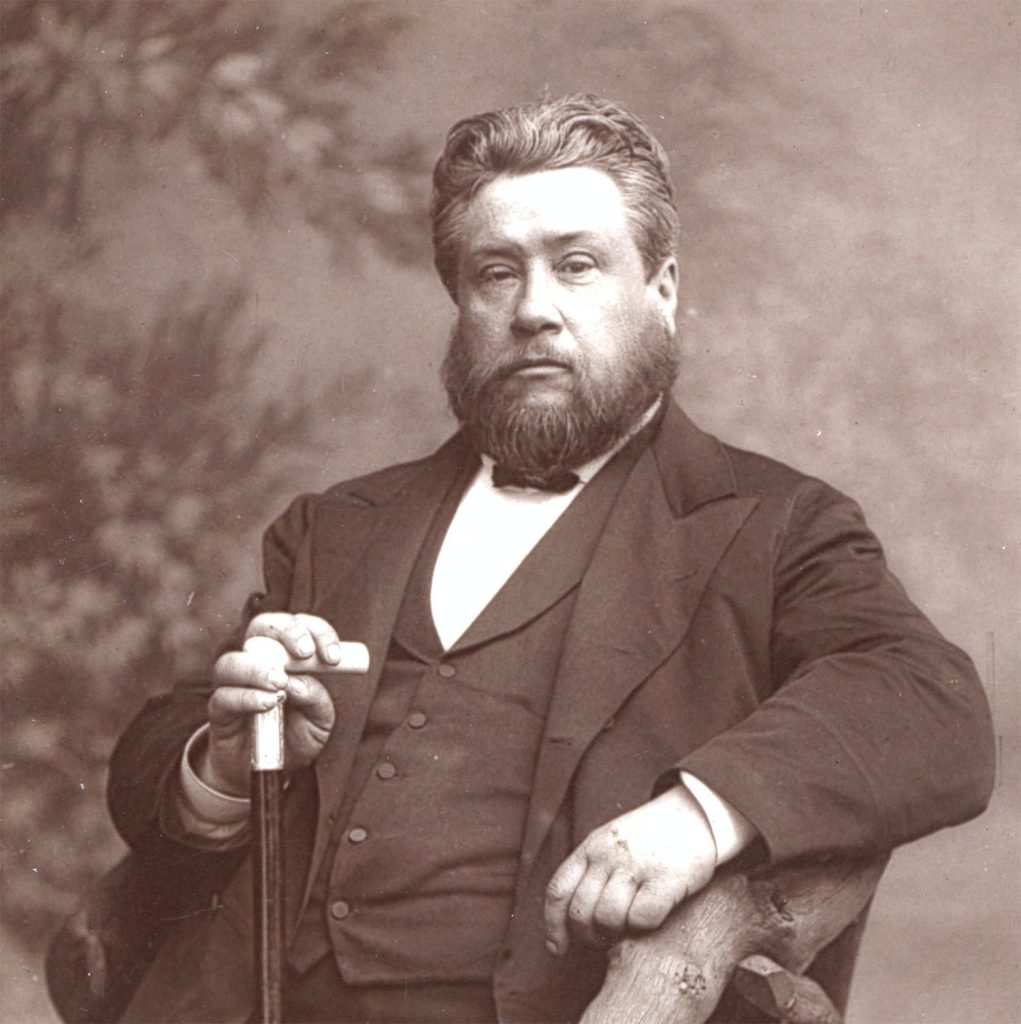
Nicknamed the “Prince of Preachers,” Charles Spurgeon is frequently recognized as one of the greatest preachers in history. When asked about the secret to his successful ministry, Spurgeon responded that his people prayed for him. Spurgeon went so far as to call the prayer gathering of the Metropolitan Tabernacle the “power plant” or “boiler room” of his church. There was no doubting the connection between prayer and successful ministry in the mind of Charles Spurgeon.
One of the great needs of the modern church is men and women who fervently pray for the faithfulness of the church. The church’s faithfulness is most often seen in the content of the preaching that flows from its pulpit. Therefore, church members should spend time praying over the preaching of the Word. In the letter to the Colossian church, Paul instructs the believers there to be in prayer for him and those working alongside him as they preach the Word.
Colossians 4:2-4 (ESV) says, “Continue steadfastly in prayer, being watchful in it with thanksgiving. At the same time, pray also for us, that God may open to us a door for the word, to declare the mystery of Christ, on account of which I am in prison – that I may make it clear, which is how I ought to speak.” These instructions on praying for preaching inform the way we pray for those preaching the Gospel today in a few specific ways:
1. We Pray for Open Doors for the Word
Paul tells the Colossian church to pray for the Lord to open a door for the Word. Naturally, this means we should pray for opportunities for the Gospel to be proclaimed. Furthermore, we should pray that the Lord would open hearts, minds, and ears to hear and understand the Gospel as it is preached. Just as God must open the door to preach, He must open the heart to hear the preaching.
Over the last year, the Lord has reminded me never to take a preaching opportunity for granted. Each door the Lord opens is part of God’s providential plan to carry the Gospel to the nations and redeem His people. Thus, we pray for preaching opportunities for faithful preachers not to build the preacher’s fame and platform or to stroke his sinful ego but that the kingdom of God may be built up through the clear preaching of the Gospel and the fruits of conversion. We pray this prayer not only for our own preacher at our local church but also for those preaching the Gospel on the mission field. We pray that God would give faithful Gospel witnesses the opportunity to speak and proclaim the Word of God into the lives of those around them.
2. We Pray for the Gospel to be Preached.
This seems like an elementary thing that should go without saying. And yet, it must be said. An unfortunate element of our sin nature is that there is no shortage of temptations for preachers to preach ineffective things such as self, opinion, works, prosperity, pragmatism, pleasure, or politics. Rather, we must pray for our preacher to stand firmly on the side of biblical faithfulness by God’s grace and proclaim the mystery of Christ, which is the Gospel.
We must pray that our preacher be a Gospel preacher determined to know nothing except Christ and Him crucified. (1 Cor. 2:2) We pray that our pastors have the courage to preach the Gospel even when it may cost them prison and death as it did Paul. We pray that our pastor dares to preach the Gospel even when it is unpopular. We need the pure preaching of the Gospel, that we are saved by grace through faith in Christ. Rather than preaching the poverty of man’s wisdom or preaching for self-glorification, pray that the preacher will preach the riches of Christ and for the glory of God.
3. We Pray that the Gospel is Clear
Paul concludes his exhortation to prayer by asking the Colossians to pray that he would make the Gospel clear as he ought to speak. We should pray that every sermon is clear. In Nehemiah 8:8, we read, “They read from the book, from the Law of God, clearly, and they gave the sense, so that the people understood the reading.” This should be the goal of the faithful expositor: to give the sense of the Scriptures in a clear way so that the hearers understand the meaning of the text. The aim is not to impress academics, entertain audiences, or insult the ignorant. The aim is to clearly communicate the plain meaning of the text. Therefore, we should pray that the preacher would have clarity of mind and speech by God’s grace so that they may communicate clearly.
Naturally, there are innumerable things we should be praying over regarding our pastors. However, when it comes to their preaching, we must pray that the Lord opens the doors, the preaching is Gospel saturated, and the preaching is clear.
Within the world of church music lies a specific style known as Sacred Harp music. Sacred Harp music is a form of hymn-singing that is a capella and relies on shape notes. A few years ago, I fell in love with a Sacred Harp hymn known as Antioch 277. The chorus rings out: “Shout on, pray on, we’re gaining ground. Glory, Hallelujah! The dead’s alive and the lost is found. Glory, Hallelujah!”
“Shout on, pray on, we’re gaining ground. Glory, Hallelujah! The dead’s alive and the lost is found. Glory, Hallelujah!”
Antioch 277
On the surface, the idea of gaining ground seems foreign, if not wrong, to many Christians in the 21st century. After all, isn’t the culture and the world around us snowballing downhill, face-first into greater and greater depravity? Is not the moral compass of our current culture more confused than ever on things like the sanctity of life, sexual ethics, recreational drug use, and social justice? The clear manifestation of the sins of the world leaves many Christians wondering in what sense we are “gaining ground.”
Yet, Scripture is clear in telling us that we are gaining ground in undeniable ways. In Colossians 1, the apostle Paul writes to the Colossian church, rejoicing with thanksgiving that the Gospel had come to them “as indeed in the whole world it is bearing fruit and increasing.” (Col. 1:6) Furthermore, Paul says that even amongst the Colossian church, he prays that the Gospel would bear the fruit of sanctification and increase the believers’ knowledge of God. At the very moment when Paul wrote under the inspiration of the Holy Spirit that the Gospel was gaining ground, he was imprisoned in Rome, the city of Colosse was in economic decline, and dangerous heresy was running amok. This setting hardly sounds like gaining ground. And yet, Paul tells us that even then, and even now, the Gospel is gaining ground.
This passage reveals two distinct ways that the Gospel is gaining ground. The first is the literal spread of the Gospel and more and more people coming to a saving knowledge of Jesus Christ by the grace of God. Right now, throughout the world, the Gospel is going forward through the faithful and sacrificial work of Bible preaching missionaries and pastors. As R.A. Torrey notes, the verse is not talking about more Bibles being printed. Rather, Paul is saying that throughout the world, the truth of the Gospel is being believed by God’s grace and people are being “delivered from the domain of darkness and transferred” into the Kingdom of God. (Col. 1:13)
It is so easy for us to get trapped in only thinking about our area, our political landscape, our country, and our view of the world, which can easily color our thinking about the advance of the Gospel in a negative way. Growing up in South Alabama, in the politically conservative Bible Belt, I was truly and sincerely shocked to find out that there were actually Christians in California when I got older. Much less in places like China, Syria, and Chile, and the Congo. Yet, throughout the world, whether I believed it or not, faithful brothers and sisters were preaching the Gospel and the Gospel was bearing fruit and increasing by the grace of God. We need to shift from a self-centric viewpoint that only sees what is right in front of us to a church-centric viewpoint that views the world through the lens of the church universal. In other words, we should not only think about the advance of the Gospel and the fruit of that advance in terms of our life, or even our local church, but we should see that what God is doing is bigger than just us. God is moving all over the world, calling His people to salvation, and sanctifying His people to greater holiness. So, when we are tempted to be discouraged that we may be in a drier season in terms of fruit in our personal life or in our local church’s ministry, we should remember that God is working all over the world. We should speak with our mission partners and hear their stories. We should remember that God is accomplishing His perfect plan, and that not even the gates of hell can prevail against His church.
How do we respond to this glorious truth? We shout on and we pray on. We rejoice in the work that God is doing. We rejoice in the work of faithful churches, missionaries, and missions sending agencies. We rejoice that God is not still, sleeping, or slumbering. We pray for the work to be done, that God would raise up faithful missionaries, break the hearts of the lost, and draw people unto Himself. Additionally, we pray that our own personal efforts in sharing the Gospel would be effective.
However, the passage has more to tell us. The second way that we are gaining ground is in terms of the sanctification of believers in Christ. If we are truly saved by the grace of God, we are being sanctified by the grace of God. In other words, all true believers are gaining ground in their pursuit of holiness by God’s grace. Paul clearly states that the Gospel has continued to bear fruit in the Colossian church from the moment they “heard and understood the grace of God in truth.” (Col. 1:6) Paul continues by praying for the Colossian church that they would be sanctified. In Colossians 1:9-12, Paul outlines key areas where he is praying for their sanctification. He prays that the church would bear fruit, increase in the knowledge of God, be strengthened for endurance and patience, and be thankful for the grace of God to them.
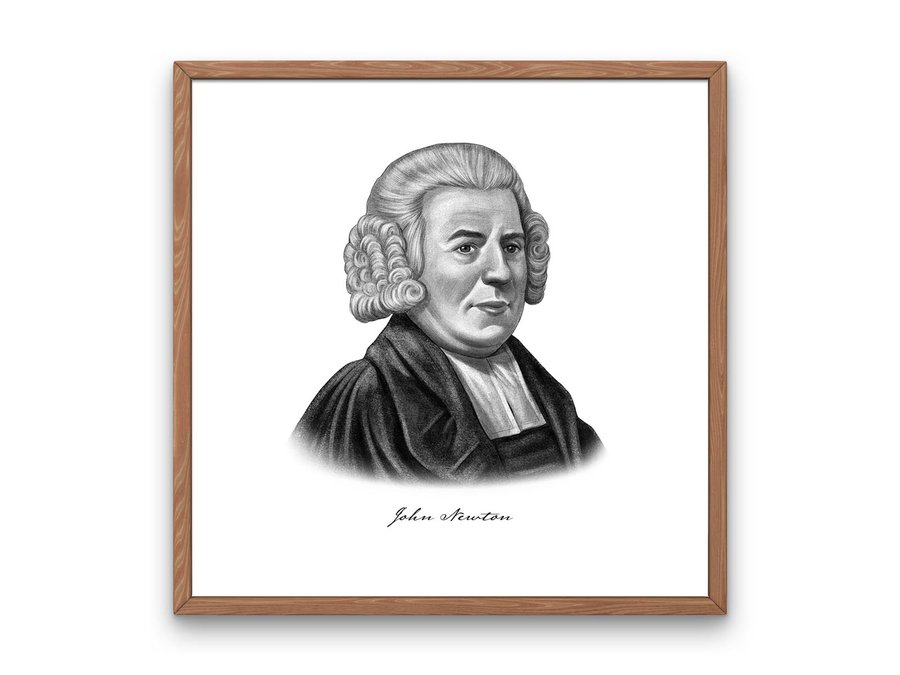
In the same way, we can rejoice that God is sanctifying us, as true believers, as well. Just as the Colossian believers were growing in grace from the moment they heard and believed the Gospel, so too are we who believe today. Therefore, each day, as we press on in the Christian life, we are gaining ground. As John Newton, the former slave ship captain and author of Amazing Grace, once wrote: “I am not what I ought to be, I am not what I want to be, I am not what I hope to be in another world; but still I am not what I once used to be, and by the grace of God I am what I am.”
“I am not what I ought to be, I am not what I want to be, I am not what I hope to be in another world; but still I am not what I once used to be, and by the grace of God I am what I am.”
John Newton
Newton rejoiced that he was no longer the callous slave ship captain and rested in the amazing grace that saved such a wretch as him. Newton realized that though he still failed, he had gained ground by God’s grace. While our story is likely different from Newton’s, we too have gained ground from when we first believed. We are not where we want to be or where we will be when we enter eternity, but we are not where we were and that deserves rejoicing and prayer. Shout on. Rejoice in the work that God has done in your life. Pray on. Pray that God would draw you ever nearer to Him and that He would shape you into greater holiness.
These are two undeniable ways that Christians are gaining ground. God is adding to our number daily through the advance of the Gospel by His Grace. God is sanctifying us day by day by His Grace. In both cases, we can and must say, “Glory, Hallelujah!” I am not arguing for some pie in the sky optimism. But I am arguing for Gospel rejoicing over the fact that God’s Word is accomplishing its purpose, that dead hearts are raised to life by the grace of God, and that we are growing in grace. We must always keep perspective by seeing the big picture of God’s work throughout the world. So, shout on, pray on. We are gaining ground. Glory, Hallelujah!
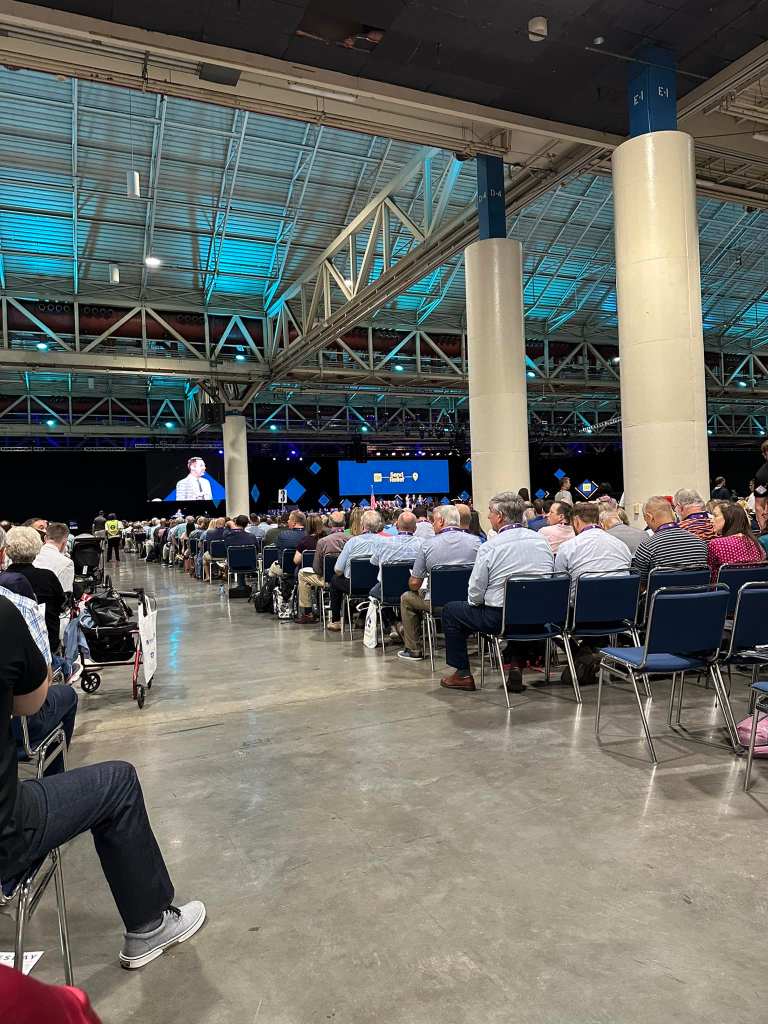
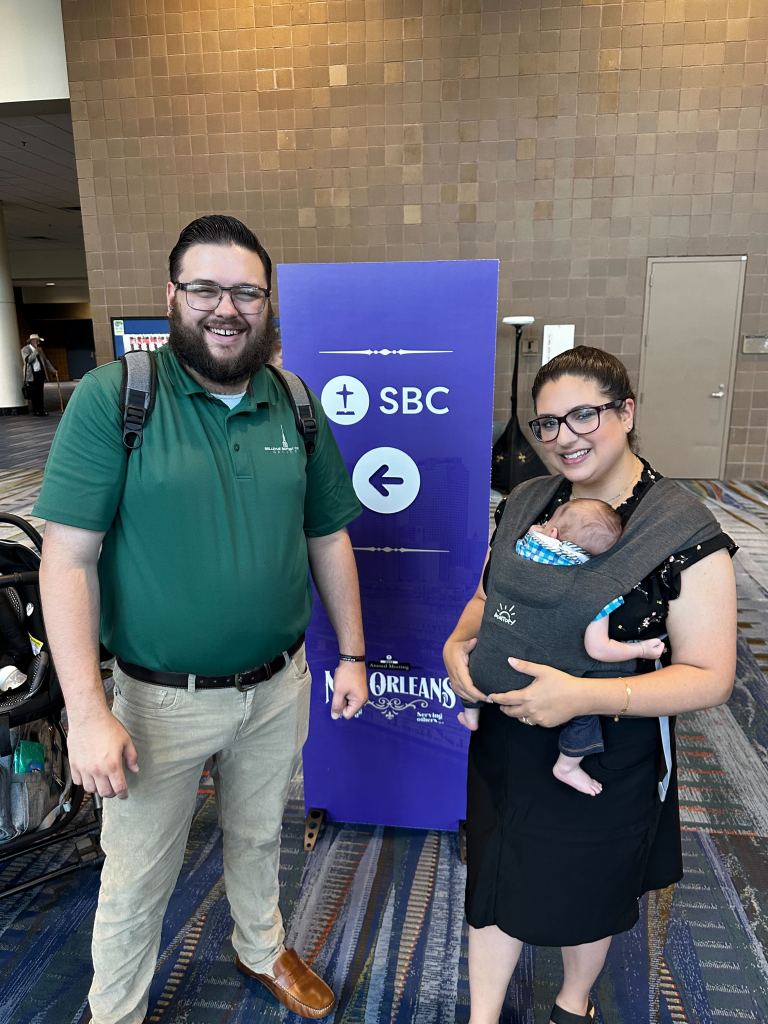
Our church sends messengers each year to the Southern Baptist Convention’s (SBC) annual meeting. Following each meeting, there is a media storm of news and opinions related to the actions taken at the meeting. To answer the questions of our church members, I have written this article to provide my perspective on actions taken and what this means for our church moving forward.
This year, the annual meeting occurred in New Orleans, Louisiana, on June 13 and 14. For those who are unaware, the SBC is our denominational partner, to whom we give a percentage of our offering for the purpose of cooperating with other like-minded churches to expand our impact and reach in critical ministry areas such as international missions and theological education. Because of our giving to the cooperative program and our Statement of Faith and church practices that closely align with that of the SBC, we are entitled to send messengers to vote on critical issues impacting the SBC and to elect leaders and representatives on various committees and boards.
In this year’s business sessions, the messengers of the SBC voted on several items related to our convictions on complementarianism and the role of men and women in ministry. First, the messengers voted to disfellowship three churches. Two of the three churches (Fern Creek Baptist Church of Louisville, KY, and Saddleback Church of California) were disfellowshipped from the SBC for employing, ordaining, and affirming women pastors. This became a high-profile decision due to Rick Warren, former pastor of Saddleback Church, campaigning against the decision to remove churches over the issue of women pastors. However, the SBC voted overwhelmingly to reject the appeals of these churches and finalize their dismissal from the SBC. Additionally, the messengers voted to approve resolutions affirming the complementarian position of the office of pastor being reserved only for qualified men. The convention also approved a constitutional amendment restricting cooperating churches to those who affirm, appoint, or employ “only men as any kind of pastor or elder as qualified by Scripture.” This amendment must be approved again at the 2024 annual meeting for final adoption and approval. When all of these are considered, the messengers of the SBC sent a clear message that we believe that the office of pastor is for qualified men alone. Unlike other mainline denominations, such as the United Methodist Church, the SBC has not compromised on the issue of women pastors and has drawn a clear line in the sand for cooperating ministries.
Another significant development at this year’s annual meeting was the amending of the Baptist Faith and Message 2000. Jared Cornutt, Pastor of North Shelby Baptist Church and Gadsden native moved to amend the BF&M2000 to add clearer language on the office of pastor. Cornutt moved that article VI, “The Church,” now say: “Its two scriptural offices are that of pastor/elder/overseer and deacon. While both men and women are gifted for service in the church, the office of pastor/elder/overseer is limited to men as qualified by Scripture.” Cornutt’s motion added the alternative words for pastor found in the New Testament. This language helps readers understand that we see the offices of pastor and elder as the same office. This was a significant moment in the life of the convention. Any time we make changes to our official statement of faith, it must not be taken lightly or understated. Though the substance of the confession is unchanged, we can rejoice in the greater clarity provided by the amendment.
As we do each year, the messengers elected officers for the 2024 convention. This year, Bart Barber was re-elected as President, Jay Adkins was elected 1st Vice-President, and Kason Branch was elected 2nd Vice-President. Particularly noteworthy in these elections was the lack of a candidate who was a pastor of a mega-church (churches with over 2000 in attendance). Notably, all the candidates nominated were local church pastors rather than mega-church pastors or celebrity pastors. I believe this is worth celebrating as it marks the convention being led by everyday pastors for the first time in decades. I believe that the leadership of our convention of churches should reflect the makeup of that convention which means more regular pastors and fewer mega-church pastors.
Finally, the annual meeting commissioned and sent out 79 international missionaries through the International Mission Board. This special time includes the missionaries sharing their testimonies, call to missions, and prayer requests as they travel to foreign nations for the sake of the Gospel. Many of these missionaries were not allowed to show their faces or reveal details about the specific countries they were traveling to due to significant safety concerns. The sending of missionaries to the ends of the Earth is the heartbeat of the SBC. We cooperate for the sake of reaching the nations. The missions sending ceremony is a powerful reminder each year that the reason we meet is for the purpose of furthering the Kingdom by the Grace of God.
Other personal highlights from the convention include singing hymns acapella each night at the 9 Marks at Nine events, celebrating Dr. R. Albert Mohler’s 30th Anniversary as President of The Southern Baptist Theological Seminary, and sharing great fellowship over fantastic New Orleans cuisine. As always, I am thankful to Bellevue Baptist Church of Gadsden for sending us as messengers to the convention and for being faithful and concerned about glorifying God and leading others to do the same from the mountain to the nations. I return home more energized to faithfully proclaim God’s Word and work together for His namesake as a church.
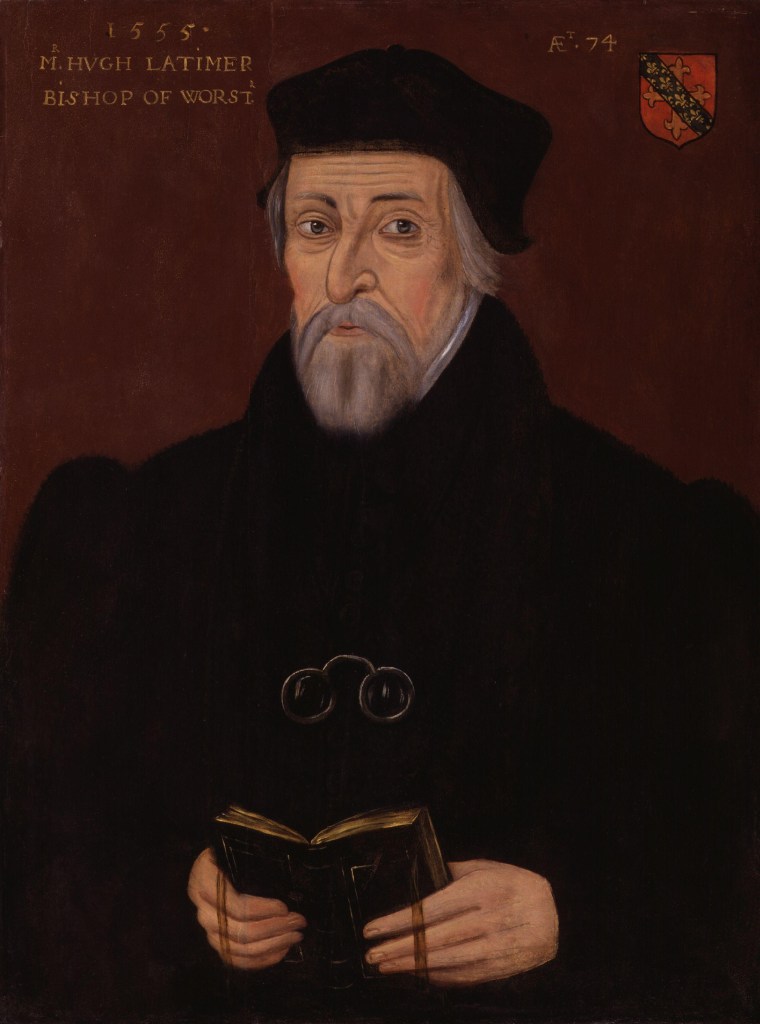
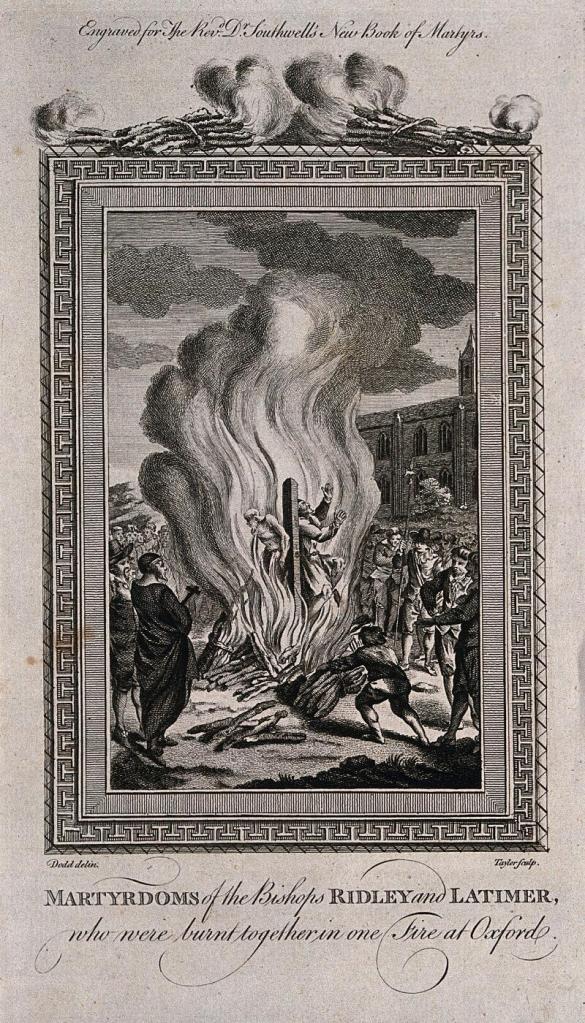
467 years ago, this week, the Oxford Martyrs were burned at the stake for standing on the Reformation principles of the Gospel. Hugh Latimer and Nicholas Ridley were burned at the stake on October 16, 1555 outside of Balliol College in Oxford. That day, Hugh Latimer produced one of the most famous quotes of the Reformation. As the executioners lit the fires, Latimer turned to Ridley and said:
“Be of good comfort, Dr. Ridley, and play the man. We shall this day light such a candle by God’s grace in England, as I trust never shall be put out.”
Though Latimer’s quote is, in my opinion, one of the greatest expressions of boldness and trust in God’s providential care, it is not for this reason alone that he should be remembered with fondness by believers. It was not Latimer’s final quote but the totality of his faithfulness to the Gospel of Christ that makes him a hero of mine. His portrait hangs on the wall of my office to remind me that faithfulness to God’s Word alone must motivate my every action. Latimer’s commitment to the Gospel began in his conversion, was evidenced in his preaching, and was confirmed in his death.
Latimer was born into a family of simple farmers but rose to attend the University of Cambridge, where he served as the university preacher and chaplain. Throughout this time, Latimer was an ardent Catholic who hated the teachings of the Reformation. He described himself as “obstinate a papist as any was in England.” However, much like Paul, the persecutor of the Reformation soon became a preacher of the Reformation. God, in His Providence, used another former Catholic to lead Latimer to the Gospel.
Thomas Bilney had come to faith in Christ and sought to share the true Gospel with Latimer in a creative way. Bilney asked Latimer to hear his confession, but rather than a confession, Bilney shared the pain that he had felt from the depths of his sin and how he had found peace through salvation by grace through faith. Latimer was awestruck and instantly, he believed the Gospel. Latimer stated, “I learnt more by this confession than by much reading and in many years before. I now tasted the word of God, and forsook the doctors of the school and all their fooleries.” Though Latimer heard Bilney’s “confession,” it was he who confessed, repented, and believed the Gospel.
From that day onward, Latimer was immovably committed to preaching and defending the true Gospel. This was evident in his preaching and teaching as the Bishop of Worcester. Perhaps the best example of Latimer’s faithfulness came in his sermons before King Henry VIII. Latimer once preached with particular boldness and conviction on the biblical teaching against divorce while Henry VIII was in the congregation. Henry was obviously unhappy with the content of the sermon and ordered Latimer to apologize the following week and take back his teaching. The following Sunday, with Henry VIII in the congregation looking for an apology, Latimer began his sermon with the following prayer:
“Latimer! Latimer! Do you remember that you are speaking before the high and mighty King Henry VIII; who has power to command you to be sent to prison, and who can have your head cut off, if it please him? Will you not take care to say nothing that will offend royal ears?” He then paused and continued, “Latimer! Latimer! Do you not remember that you are speaking before the King of Kings and Lord of Lords; before Him, at whose throne Henry VIII will stand; before Him, to whom one day you will have to give account yourself? Latimer! Latimer! Be faithful to your Master, and declare all of God’s Word.”
Latimer faithfully lived out Matthew 10:28, “And do not fear those who kill the body but cannot kill the soul. Rather fear him who can destroy both soul and body in hell.” He exemplified Paul’s exhortation to Timothy to preach the word whether in season or out of season. Latimer defied a King that beheaded multiple wives and instead remained faithful to God alone. In the current day, in which it is all too common for the church and churchmen to capitulate to the culture by compromising God’s Word, we need more men like Latimer. Men who will faithfully stand on the Word even when it costs something. Far too many will not share the Gospel with a friend for fear of awkwardness, much less boldly preach the Word to tyrants.
Latimer’s commitment to God’s Word continued to his final moments. Latimer persevered to the end; he was faithful to God’s Word even when it ultimately cost him his life. When Henry’s daughter ascended to the throne, she earned the nickname “Bloody Mary” for her ruthless persecution of protestants, ordering the death of around 300 people. Because Latimer and his colleagues, Nicholas Ridley and Archbishop Thomas Cranmer, would not repent of their convictions, they were sentenced to be burned at the stake immediately. As Ridley and Latimer were chained to the stake and the kindling lit, Latimer offered his famous words. These words evidence Latimer’s faith in God’s Providence and the sureness of his salvation. “Be of good comfort” or “good cheer.” How can one say such a thing amidst being burned? The comfort of the Gospel and the knowledge that “to die is gain” allowed them to be cheerful even while facing such a painful death. Latimer’s encouragement to “play the man” showed that his desire was to be bold in the face of persecution and to demonstrate courage and faith. Finally, Latimer’s assurance that they were lighting a candle by God’s grace in England evidenced his firm belief in God’s providence. Latimer knew that they were not dying in vain, but rather their death would be an example and encouragement to others to stand firm in the faith. Though Latimer did not know how God would use their death, he knew that God would use it to accomplish His purposes for the Gospel in England.
As amazing as the “play the man” quote is, I am often baffled by an earlier quote. At Latimer’s sentencing, he rejoiced saying, “I thank God most heartily that He hath prolonged my life to this end, that I may in this case glorify God by that kind of death.” He saw even his death as an opportunity to glorify God. Again, we see that Latimer exemplifies the words of Romans 8:18, “For I consider that the sufferings of this present time are not worth comparing with the glory that is to be revealed to us.”
Today, may we all “play the man.” We do this not by simply putting on a brave façade of macho-ness. But rather, we “play the man” by seeking to glorify God in whatever He has called us to, whether that be preaching boldly without compromising before kings or dying a martyr. May we be inspired by Latimer’s legacy of standing on the Word regardless of what it may cost.
On Thursday of Holy Week, we observe Jesus and the disciples sharing the last supper, Jesus humbling Himself by washing the disciples’ feet and showing them and all of the posterity that no one is too great to serve, and we see Jesus praying in the Garden of Gethsemane before being turned over to the authorities to be tried and crucified.
Each of these is worth extensive study and teaching and is incredibly beneficial to every believer. However, as encouraging as the words of Jesus’ High Priestly prayer are, the words He speaks just before those are some of the most encouraging words in all of Scripture. These words are found in John 16:30-33.
John 16:30–33 ESV
30 Now we know that you know all things and do not need anyone to question you; this is why we believe that you came from God.” 31 Jesus answered them, “Do you now believe? 32 Behold, the hour is coming, indeed it has come, when you will be scattered, each to his own home, and will leave me alone. Yet I am not alone, for the Father is with me. 33 I have said these things to you, that in me you may have peace. In the world you will have tribulation. But take heart; I have overcome the world.”
The disciples thought that they fully understood and believed what Jesus was saying. And yet, Jesus reveals something that is shocking to them. According to Jesus, the disciples would soon scatter and abandon Jesus. They would leave Him alone. The historic teaching of the texts is that the disciples did just that.
In fact, The Gospel of Mark tells us that they all fled.
Mark 14:50–52 ESV
50 And they all left him and fled. 51 And a young man followed him, with nothing but a linen cloth about his body. And they seized him, 52 but he left the linen cloth and ran away naked.
Most people understand verses 51 and 52, to be referring to Mark himself, who was an eyewitness, but not a disciple. Jesus had truly been deserted by those who claimed to follow Him. However, in preparing the disciples for this moment in the John text, He tells them that even though He would be abandoned, He was not truly alone. Jesus’ comfort was found in the Father and trusting in His plan for Jesus and all of humanity. We too must realize that our encouragement should be similar. Even when all our friends or family abandon us, we are not truly alone. Jesus promised us that He is with us always, even unto the end of the age. So even if we are alone in standing for the truth of God’s Word in this world, we are not truly alone.
Jesus told the disciples these things that they would have peace amidst tribulation by trusting in Him. For He has truly overcome the world. When Jesus was on the cross, He would state that the Father had forsaken Him. This was part of the Father pouring out His wrath on Christ as Jesus took the punishment that we deserved for our sins. Jesus became truly alone and died so that we would never be alone and eternally live with Him.
When Jesus rose from the grave, He showed that He had truly overcome the world, death, and the grave. So, for us, especially in this season, we are to take heart in the accomplished and finished work of Christ and walk confidently in His will for us each day.

















 Colt Hudson